The First Claims · Part 2 of 2
What the Machine Did
The first AI liability claims are also about what the machine did. Biased hiring algorithms and the fight over training data show where the biggest exposures are, and where the exclusions are moving fastest.
Joel R. Singh
Underwritten
2026-08-19
Part 1 followed the machine's words into court, where old torts like misrepresentation and defamation reappeared in a new voice. These claims follow something that is hard to hear and much harder to see, the machine's decisions and the data it was built from. That is where the biggest exposures are, and where the exclusions are moving fastest.
The Algorithm That Screened You Out
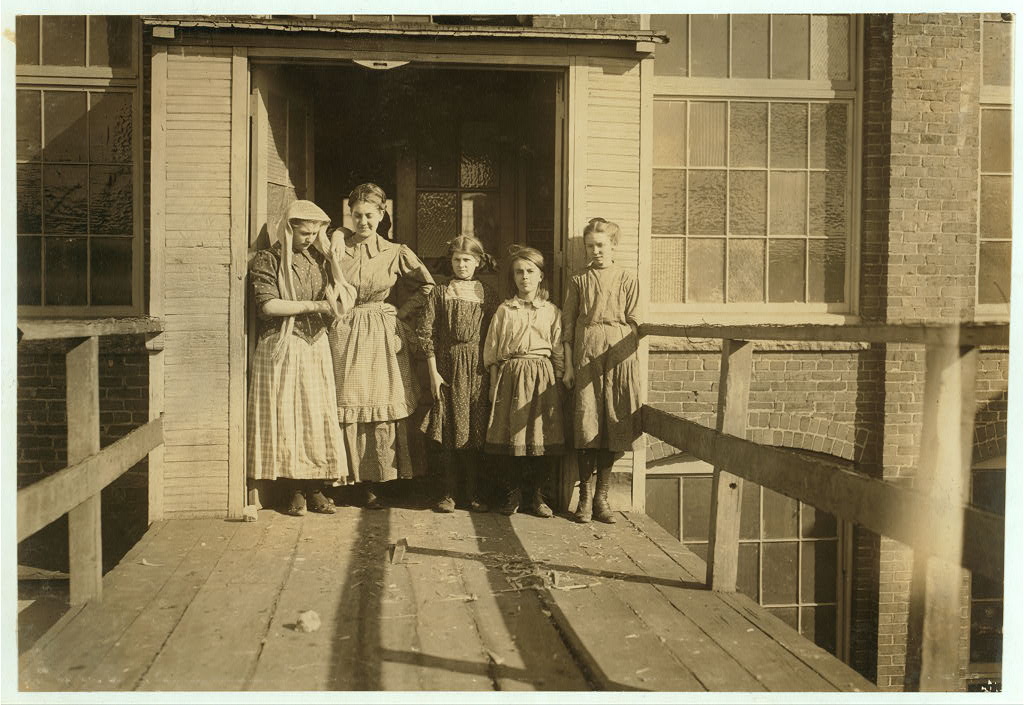
The most consequential category of early AI claim may not involve a chatbot talking at all. It involves a machine deciding who gets through and who gets cut, and the discrimination that can be baked into that line. When a company uses software to screen job applicants, to rank resumes, or to decide who advances to an interview, it has handed a consequential decision to a system whose reasoning no one in the building may fully understand. If that system produces outcomes that fall unequally on older applicants, or on applicants of a particular race, or on those with disabilities, the company has a discrimination problem whether or not anyone intended one.
The case that has done the most to concentrate this exposure is Mobley v. Workday, working its way through a federal court in California.[1] Derek Mobley alleged that the algorithmic screening tools sold by Workday, and used by the many employers who license them, discriminated against applicants on the basis of race, age, and disability, and he pointed to his own long record of applications rejected through those tools. What made the case pivotal was not only the allegation but a ruling on who can be sued. In July 2024 the court allowed the disparate-impact claims to proceed on the theory that Workday itself, the vendor of the screening software, could be held liable as an agent of the employers who deployed it.[2] In May 2025 the court granted preliminary certification of a nationwide collective under the Age Discrimination in Employment Act, and it later extended the reach of that collective to applicants screened by the vendor's newer AI features.
[1] Civil Rights Litigation Clearinghouse — Mobley v. Workday, docket 3:23-cv-00770 (N.D. Cal.) · [2] Same, July 2024 partial-dismissal order
Read that ruling as an underwriter would. It says that the exposure created by a biased algorithm can flow in two directions at once, toward the employer who used the tool and toward the vendor who built and sold it, and that both may find themselves defendants in the same action. It says that these claims scale, because a single screening algorithm applied across thousands of applicants produces not one plaintiff but a certifiable class or collective. And it locates the whole problem squarely in employment practices liability, the specialized coverage that responds to discrimination and wrongful-hiring claims, a line of insurance that is now absorbing a risk its drafters did not build it around. The algorithm did not invent employment discrimination. It industrialized it, turning what was once a series of individual human decisions into a single automated one that either discriminates against everyone it touches or against no one.
The algorithm did not invent employment discrimination. It industrialized it.Mobley v. Workday, read for coverage
Government enforcement has been moving on the same ground, and it moved earlier than many people realize. In 2023 the Equal Employment Opportunity Commission settled a suit against a tutoring company, iTutorGroup, that had programmed its application software to automatically reject female applicants aged fifty-five and older and male applicants aged sixty and older.[3] The evidence was almost cinematic in its clarity. One applicant was rejected using her real birthdate, then reapplied with a younger birthdate and promptly received an interview. The company settled for three hundred sixty-five thousand dollars covering more than two hundred applicants, in what the commission described as its first settlement involving AI-driven hiring discrimination. That number is not large as corporate settlements go, but it is a real dollar figure attached to a real automated decision, and it tells insurers that the regulators are not waiting for the technology to mature before they enforce.
[3] U.S. Equal Employment Opportunity Commission — iTutorGroup settlement press release, docket 1:22-cv-02565 (E.D.N.Y.)
The Fight Over the Training Data
The largest and most closely watched of the early claims are not about a single wrong answer or a single rejected applicant. They are about the raw material of the models themselves, the vast corpus of text and images scraped and ingested to train them, and whether that ingestion was lawful. This is the copyright front, and it is where the dollar figures stop being modest.
The most prominent of these suits is the one The New York Times brought against Microsoft and OpenAI at the end of 2023, alleging that millions of its articles were copied without permission to train the systems behind ChatGPT and its commercial cousins.[4] In March 2025 the court denied the bulk of the defendants' motion to dismiss, allowing the central copyright claims to proceed toward discovery and, potentially, a jury, while narrowing some of the ancillary claims brought under the Digital Millennium Copyright Act.[5] A parallel line of cases from book authors reached a milestone the same summer. In June 2025, in Bartz v. Anthropic, a federal judge in California held that training a model on lawfully purchased and digitized books could qualify as transformative fair use, while separately holding that downloading pirated copies from shadow libraries to build a training corpus was not protected at all, and ordering a trial on that piracy.[6] The company later agreed to a settlement reported at one and a half billion dollars covering the pirated works, a figure widely described as the largest copyright settlement on record.[7]
[4] AI Lawsuit Tracker — NYT v. Microsoft/OpenAI, docket 1:23-cv-11195 (S.D.N.Y.) · [5] Justia — NYT v. Microsoft, Doc. 514 (Mar. 2025) · [6] Wiggin and Dana — Bartz v. Anthropic · [7] Copyright Alliance — Bartz settlement
The dollar figures
$1.5 billion: the reported Bartz v. Anthropic settlement over pirated training data, described as the largest copyright settlement on record. The New York Times, Getty, and the Authors Guild are litigating the same question across two continents.
The dispute is not confined to text, and it is not confined to the United States. Getty Images has been litigating against Stability AI over the use of its photographs to train an image-generating model, pursuing the fight on two continents at once.[8] In the United Kingdom, the High Court delivered a judgment in November 2025 after Getty had narrowed its case considerably, abandoning its primary copyright and database claims before trial and pressing forward mainly on secondary infringement and trademark grounds.[9] The court rejected the secondary copyright theory, reasoning that the trained model weights do not themselves store the copyrighted images, and it found only a narrow trademark violation limited to early outputs that reproduced visible Getty watermarks. Back in the United States, the American authors' cases have been sharpening the second half of the copyright question, the outputs rather than the inputs. In October 2025 a federal judge in New York allowed authors to proceed against OpenAI on the theory that ChatGPT's own generated text can be substantially similar to their copyrighted novels, holding that the model's outputs, and not only the data fed into it, can themselves infringe.[10]
[8] AI Lawsuit Tracker — Getty v. Stability AI (US) · [9] Courts and Tribunals Judiciary (UK) — Getty Images v. Stability AI, [2025] EWHC 2863 (Ch) · [10] Justia — Authors Guild v. OpenAI, Doc. 716 (Oct. 2025)
For the insurance market these copyright cases raise a coverage question with an uncomfortable answer, and the discomfort belongs to the policyholder. Intellectual property infringement is one of the risks a standard commercial general liability policy is written to keep out. The personal and advertising injury coverage in a modern general liability form carries an intellectual property exclusion that removes injury arising out of the infringement of copyright, patent, trademark, or trade secret, leaving only a pair of narrow carve-outs tied to a company's own advertising.[11] A company sued for training a model on scraped articles or generating an infringing image will very likely find its general liability policy does not respond at all. The coverage that answers this kind of claim, if any coverage does, is specialized media liability or a technology errors and omissions policy that has been specifically extended to reach intellectual property exposure, and those are precisely the policies insurers are now scrutinizing, re-pricing, and hedging with fresh AI conditions.
[11] Archer & Greiner, P.C. — Insurance for Intellectual Property Claims (ISO CG 00 01 analysis)
What the First Claims Teach
What they show is that AI takes familiar perils, scatters them into unfamiliar corners, and multiplies them there. The Air Canada ruling is a misrepresentation claim, an old tort wearing new clothes. Walters is a defamation claim. Mobley and the tutoring settlement are employment discrimination claims. The copyright cases are copyright cases, the oldest kind of intellectual property dispute there is. None of these is a novel legal theory invented for the machine. What is novel is the mechanism, the speed, and above all the scale, because a single deployed model can generate the same wrong answer, the same defamatory sentence, the same discriminatory screen, or the same infringing output millions of times over, turning what used to be an isolated incident into a correlated mass event. Correlation is the word that keeps insurers awake, because their entire mathematics rests on losses being independent of one another, and an AI system that fails the same way for everyone violates that assumption at its foundation.
AI takes the perils we already know, scatters them into corners no policy was written for, and multiplies them until a single incident becomes a correlated mass event.The lesson of the loss table
This is why the two movements in the market that at first seem contradictory are in fact the same movement viewed from two sides. On one side, insurers are writing AI exclusions, carving the risk out of general liability and other traditional forms so that a claim like the ones above cannot arrive unpriced through a policy that never contemplated it. On the other side, a growing number of carriers are building affirmative AI coverage, standalone or endorsed grants that name the risk, price it, and sell it back deliberately to the buyers who need it. Both moves are driven by the same underlying event, the arrival of real claims that make the risk legible. The exclusions retreat from the risk the cases have made visible. The affirmative products advance toward it. And the buyer sits in the middle of that pincer, in danger of losing the silent coverage they used to enjoy and not yet holding the explicit coverage that would replace it.
The docket, read for coverage
What each of the first claims established
Four early disputes, and the coverage question each one forces into the open. The point of the grid is not the verdict but the exposure it maps, and the policy line that would answer for it.
Mobley v. Workday · 2023 onward
A court let discrimination claims against a hiring-algorithm vendor proceed on an agency theory and certified an age-discrimination collective. Established that both the employer and the software vendor can be sued, and that these claims scale to a class. The exposure lands in employment practices liability.
EEOC v. iTutorGroup · 2023
The employment regulator settled its first AI hiring case after software auto-rejected older applicants, for three hundred sixty-five thousand dollars. Established that enforcement is already active and does not wait for the technology to mature. The exposure is employment practices liability, now with a regulator attached.
NYT v. OpenAI & Bartz v. Anthropic · 2023 to 2025
Courts let major copyright claims over training data proceed, drew a line at pirated corpora, and saw a settlement reported at one and a half billion dollars. Established that training-data copyright exposure is real and enormous. General liability excludes intellectual property; the answer, if any, is media or technology E&O.
Getty v. Stability AI & Authors Guild v. OpenAI · 2025
A UK court rejected a secondary-infringement theory on model weights while a US court let authors argue that AI outputs themselves infringe. Established that both the inputs and the outputs of a model can carry copyright exposure, on more than one continent. The same coverage gap in general liability applies.
Where this leads next
The claims are teaching the market. The market is rewriting your policy in response.
These cases feed the two movements pulling at your coverage from opposite directions, the exclusions being written in and the affirmative grants being sold back. The place to see exactly which exclusions have taken effect, and which carriers respond, is the tracker and the comparison table.
This is Part 2. Part 1, What the Machine Said, covers the chatbot and defamation cases. For the market landscape as a whole, read the companion essay Who Insures the Machine. For what an underwriter will ask before binding cover, read The Questions Before the Policy.
Works Cited
Every case and coverage claim in this essay is sourced below, with primary court and agency material preferred and reputable legal or trade coverage where a primary document is not public. The numbers match the citation after each paragraph. Where a source compresses a more layered reality, the note says so.
- 1Civil Rights Litigation Clearinghouse, Mobley v. Workday, Inc. (docket 3:23-cv-00770, N.D. Cal.; case documents and timeline). ↩
- 2Civil Rights Litigation Clearinghouse, Mobley v. Workday, Inc. (July 12, 2024 order on the motion to dismiss). ↩ The court permitted the disparate-impact claims to proceed on an agent theory; preliminary ADEA collective certification followed on May 16, 2025, later extended to HiredScore AI applicants.
- 3U.S. Equal Employment Opportunity Commission, iTutorGroup to Pay $365,000 to Settle EEOC Discriminatory Hiring Suit (docket 1:22-cv-02565, E.D.N.Y.; consent decree 2023). ↩
- 4AI Lawsuit Tracker, The New York Times Company v. Microsoft Corporation et al. (docket 1:23-cv-11195, S.D.N.Y.; filed December 27, 2023). ↩
- 5Justia Dockets, The New York Times Company v. Microsoft Corporation et al., Document 514 (S.D.N.Y. Mar. 26, 2025) (opinion and order on the motions to dismiss). ↩ The court denied the motions in large part, allowing the core copyright claims to proceed while dismissing certain DMCA and unfair-competition claims. "Denied the bulk" states the net effect and compresses the claim-by-claim disposition.
- 6Wiggin and Dana LLP, Bartz v. Anthropic: First Court Decision on the Fair Use Defense in LLM Training (docket 3:24-cv-05417, N.D. Cal.; partial summary judgment June 23, 2025). ↩
- 7Copyright Alliance, Participating in the Bartz v. Anthropic Settlement (settlement announced August 2025, reported at approximately $1.5 billion). ↩ The settlement figure is widely reported and subject to court approval; the essay describes it as "reported at" that amount rather than final.
- 8AI Lawsuit Tracker, Getty Images (US), Inc. v. Stability AI, Inc. (U.S. proceedings; originally D. Del. 1:23-cv-00135, refiled N.D. Cal. 3:25-cv-06891). ↩
- 9Courts and Tribunals Judiciary (UK), Getty Images (US) Inc & Ors v. Stability AI Limited, [2025] EWHC 2863 (Ch) (High Court, judgment November 4, 2025). ↩ Getty abandoned its primary copyright and database-right claims before trial; the essay states this as "narrowed" and "abandoned before trial" per the judgment, and does not speculate on the reasons.
- 10Justia Dockets, Authors Guild et al. v. OpenAI Inc. et al., Document 716 (S.D.N.Y. Oct. 27, 2025) (order denying dismissal of the output-based infringement claim; docket 1:23-cv-08292). ↩
- 11Archer & Greiner, P.C., Are You Covered? Insurance for Intellectual Property Claims (analysis of the intellectual property exclusion in ISO Commercial General Liability form CG 00 01, Coverage B). ↩