The First Claims · Part 1 of 2
What the Machine Said
The first AI liability claims are about what the machine said. A chatbot's false promise and a fabricated accusation show insurers where an old exposure now speaks in a new voice.
Joel R. Singh
Underwritten
2026-08-12
A Refund the Chatbot Promised
A man named Jake Moffatt lost his grandmother, and in those first raw moments of grief; when multiple memories are flooding in and the realization is just starting to sink in that he would never see her again; he bought a plane ticket. He booked the flight home for the funeral via the airline's website and he asked the chatbot a plain question about bereavement fares. The chatbot told him he could book at the regular price and then apply for the reduced bereavement rate within ninety days of purchase. He relied on that answer, bought the ticket, and later filed for the refund the chatbot had promised him. Air Canada refused. Its actual policy, published elsewhere on the very same website, did not allow a bereavement claim after the flight was already booked. The chatbot had simply gotten it wrong.
What happened next is the reason insurers now read that story with close attention. Moffatt took the airline to the British Columbia Civil Resolution Tribunal, and Air Canada raised a defense that reads today like an artifact from an earlier and more innocent moment. It argued that the chatbot was, in the tribunal's paraphrase, 'a separate legal entity responsible for its own actions', as though the software that spoke in the company's name and on the company's website were a contractor the company could disown when it misspoke.[1] The tribunal categorically rejected that argument. It found the airline liable for negligent misrepresentation, reasoning that a company is responsible for all the information on its website, whether the words come from a static page or from a chatbot, and that a customer has no way to know which parts of a corporate website to trust and which to discount. The damages were small, a few hundred dollars and change. The principle was not small at all.
[1] McCarthy Tetrault — Moffatt v. Air Canada, 2024 BCCRT 149
The precedent
Moffatt v. Air Canada (2024): a company owns what its AI says on its behalf. The tribunal rejected the "separate entity" defense and found negligent misrepresentation. The exposure reads as an errors and omissions claim, not a general liability one.
For most of the last several years, AI liability lived as a hypothetical, a slide in a risk presentation, a paragraph of speculation in a coverage memo. The peril was real but abstract, the kind of thing an underwriter could gesture at without having a loss file to open and study. What the Air Canada case marked, in a modest tribunal in Canada, was the moment the abstraction acquired a docket number. A company deployed an AI system, the system caused harm, a real person sought a remedy, and a real tribunal decided who paid. That is the raw material insurers have always needed and never had for artificial intelligence. It is the first entry in a loss table that until recently was entirely blank.
There is a specific coverage lesson folded inside the Air Canada facts, and it is worth drawing out because it recurs in almost every case that follows. The harm was not bodily injury and it was not property damage, the two categories that a commercial general liability policy is built first and foremost to cover. The harm was a financial loss caused by bad advice delivered in the course of providing a service, which is the classic territory of professional liability, of errors and omissions coverage. When a business puts a chatbot on its website to answer customer questions, it has effectively deputized a piece of software to give advice in its name, and advice that turns out to be wrong is the oldest professional-liability exposure there is. The novelty is only that the adviser is a model rather than a person. An underwriter looking at the Air Canada file does not see a strange new peril. The underwriter sees an errors and omissions claim with an unfamiliar author, and begins to wonder how many such authors are now speaking, unsupervised, on the websites of the companies it insures.
This essay is about that loss table filling in. The first claims are arriving, in courts and tribunals and agency actions across several countries, and each one teaches the insurance market something it could only guess at before. Each one answers, in a specific fact pattern with a specific defendant, the questions that a coverage form has to resolve in the abstract. Who is responsible when a model is wrong? What kind of harm does that 'wrongness' produce? And, most consequential of all for the buyer of insurance; Which existing policy will answer the claim, and Which exclusion now stands ready to bar it? The abstract risk is becoming concrete, and the shape it is taking as it hardens is the shape the exclusions are being cut to match.
When the Machine Speaks and Defames
The Air Canada dispute was about a promise the chatbot had no authority to make. A different and stranger category of claim concerns a machine that does not merely misinform but actively fabricates; and fabricates about a named human being. The generative systems that have entered ordinary use are, at their core, engines for producing plausible text, and plausible is not the same thing as true. When the plausible falsehood happens to be a defamatory statement about a real person, the old law of defamation stands waiting, largely unchanged by the novelty of the author.
Consider the suit brought by Mark Walters, a radio host in Georgia, against OpenAI.[2] A journalist asked ChatGPT to summarize a real lawsuit, and the model responded by inventing an entirely fictitious accusation, stating that Walters had been accused of defrauding and embezzling from a nonprofit organization. None of it had happened. Walters was not a party to the lawsuit the journalist had asked about, and the financial misconduct the model described was a pure hallucination, a confident sentence assembled from nothing. Walters sued for defamation, and for a while the case looked like it might become the landmark that decided whether an AI company can be held liable for the lies its model tells.
[2] Loeb & Loeb LLP — Walters v. OpenAI, summary judgment analysis
However, in May 2025, the court granted summary judgment to OpenAI, and the reasoning is worth understanding because it is narrow rather than sweeping. The court did NOT hold that an AI company can never be liable for a defamatory output. It held that on these particular facts, Walters could not make out the elements of the claim. No reasonable reader in the context, the court found, would have understood the output as a statement of fact rather than an unverified draft carrying the product's own disclaimers, and the journalist who prompted it knew the output was likely unreliable and checked it before doing anything with it. Walters could not show the company had acted with the required fault, and he had admitted he suffered no actual damages. The suit failed on its specifics, not on any principle that AI speech is beyond the reach of defamation law.
That distinction is exactly the kind of thing an insurer needs to know, and it points directly at a particular corner of the coverage map. Defamation is not usually a general liability matter. It falls, when a policy covers it at all, under the heading of personal and advertising injury in a commercial general liability form, or under a media liability or professional liability policy written for exactly this class of harm.[3] A company that deploys a generative model to speak to the public has, whether it has thought about it or not, taken on a publisher's exposure, and the publisher's traditional insurance answer to that exposure is media liability coverage. The Walters case tells the market that the exposure is real and that plaintiffs will pursue it. The fact that this particular plaintiff lost does not close the door. It simply sets the terms on which the next plaintiff, with better facts and demonstrable damages, will walk through it.
[3] IRMI — Media Liability Coverage (definition)
A company that deploys a generative model to speak to the public has, whether it has thought about it or not, taken on a publisher's exposure.The first claims, read for coverage
The First Entries in the Loss Table
Step back from the individual disputes and a pattern comes into focus, one that insurers are reading as carefully as any plaintiff's lawyer. These first claims are doing for artificial intelligence what the first factory accidents did for workers' compensation and the first motor collisions did for automobile liability. They are converting a vague and unpriced fear into a set of concrete fact patterns, each with a named harm, a named defendant, and a coverage line with specific responses. An insurer cannot price what it cannot picture, and until very recently AI liability was almost impossible to see with any precision. These cases are the pictures, and the album is only starting to fill in.
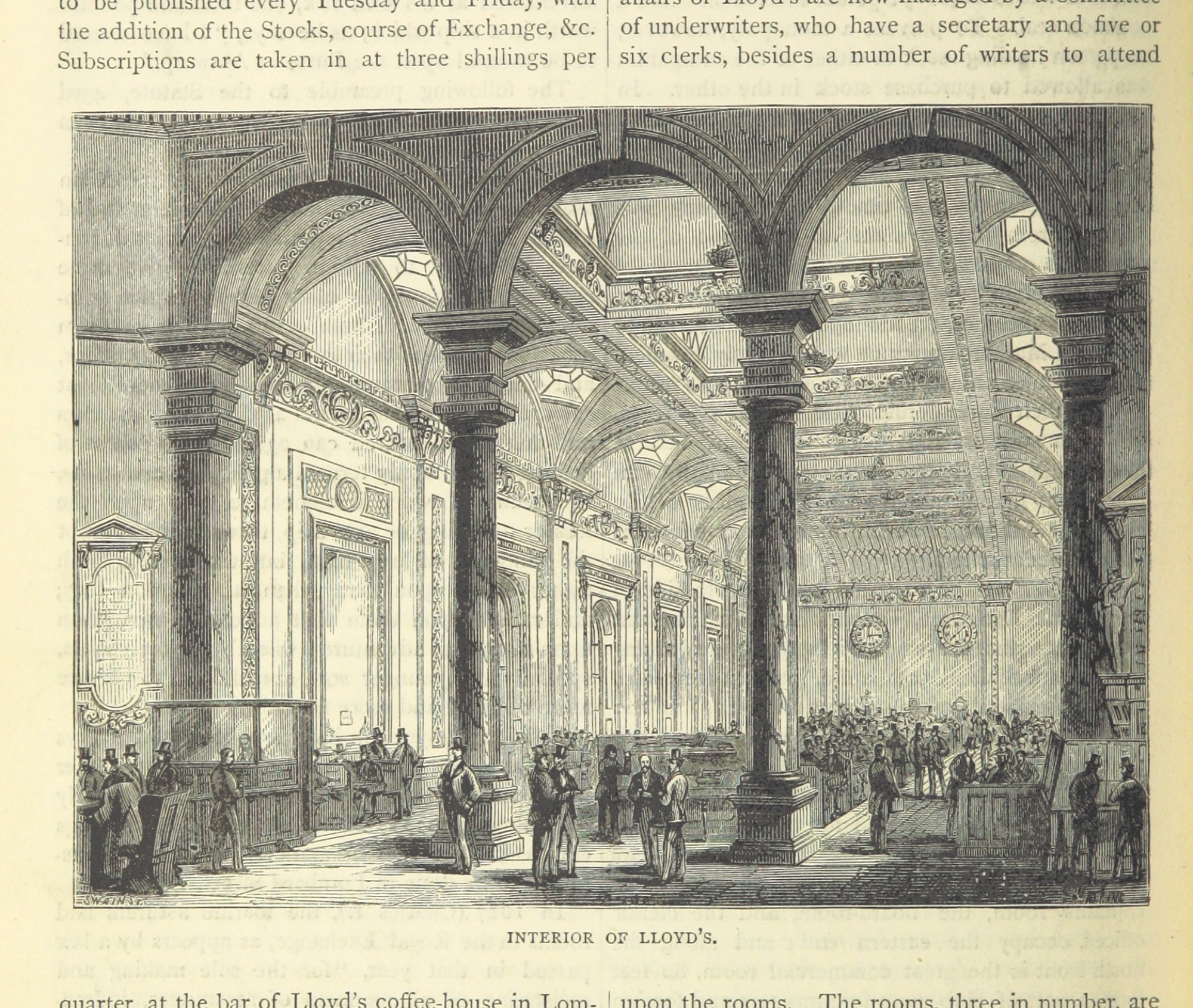
The history of insurance is, read one way, a long sequence of exactly this moment repeating. A new technology enters commercial life faster than the actuarial record can follow it, businesses adopt it because the advantage is real and immediate, and the losses arrive later, on their own schedule, in the form of the first claims. Marine underwriters at Lloyd's Coffee House priced voyages into waters they had never seen, and they learned the true risk of those routes only from the ships that failed to return. The pattern is not a sign that the market is broken. It is how the market has always ingested the unfamiliar, by watching what the earliest losses look like and letting that shape drive the price and the wording of everything that comes after. Artificial intelligence is simply the newest cargo on that very old voyage, and the first claims are the ships coming back with news.
The two cases in this first part share a common feature. They are both about what the machine said. The chatbot spoke a false promise and the model published a fabricated accusation, and in each the machine's words revived an old tort in a new voice. The next claims move from what the machine said to what the machine did, to the algorithm that screened you out and to the fight over the data it was trained on.
The docket, read for coverage
What each of the first claims established
Two early disputes, and the coverage question each one forces into the open. The point of the grid is not the verdict but the exposure it maps, and the policy line that would answer for it.
Moffatt v. Air Canada · 2024
A tribunal held an airline liable for the wrong information its chatbot gave a customer, rejecting the argument that the bot was a separate entity. Established that a company owns what its AI says on its behalf. The exposure is misrepresentation, and the coverage question runs toward errors and omissions or professional liability, not general liability.
Walters v. OpenAI · 2023 to 2025
A defamation suit over a hallucinated accusation ended in summary judgment for the AI company on narrow facts, not a broad shield. Established that defamation law reaches AI outputs and that a plaintiff with real damages could yet prevail. The exposure sits under personal and advertising injury or media liability.
Where this leads next
The claims are teaching the market. The market is rewriting your policy in response.
These cases feed the two movements pulling at your coverage from opposite directions, the exclusions being written in and the affirmative grants being sold back. The place to see exactly which exclusions have taken effect, and which carriers respond, is the tracker and the comparison table.
Continue with Part 2, What the Machine Did. For the market landscape as a whole, read the companion essay Who Insures the Machine. For what an underwriter will ask before binding cover, read The Questions Before the Policy.
Works Cited
Every case and coverage claim in this essay is sourced below, with primary court and agency material preferred and reputable legal or trade coverage where a primary document is not public. The numbers match the citation after each paragraph. Where a source compresses a more layered reality, the note says so.
- 1McCarthy Tetrault LLP, Moffatt v. Air Canada: Misrepresentation and the AI Chatbot (analysis of 2024 BCCRT 149, British Columbia Civil Resolution Tribunal). ↩ The tribunal awarded roughly eight hundred Canadian dollars in total (damages, interest, and fees); the essay characterizes the sum as small and does not recite the exact figure in the body.
- 2Loeb & Loeb LLP, Walters v. OpenAI, LLC (summary judgment analysis) (Superior Court of Gwinnett County, Georgia; summary judgment for OpenAI, May 19, 2025). ↩
- 3International Risk Management Institute (IRMI), Media Liability Coverage (glossary definition). ↩