The Price of Not Knowing
Insurance runs on loss history and large numbers, and AI offers almost none of it, which is why coverage is scarce, costly, and gated by what you can prove.
Joel R. Singh
Underwritten
2026-07-29
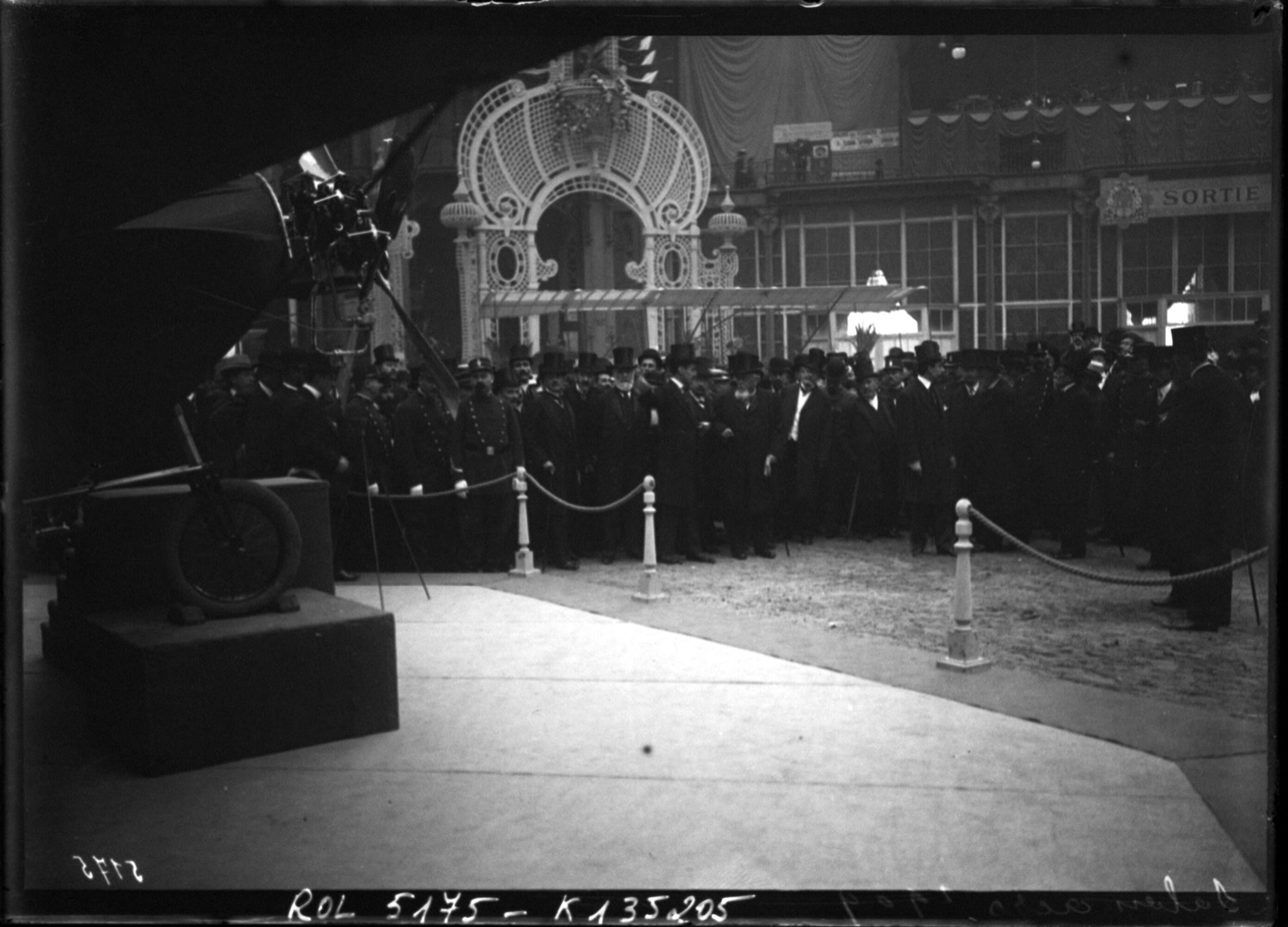
In the years just before the First World War, a handful of underwriters at Lloyd's of London began writing insurance on a machine that most sensible people still regarded as a novelty and a hazard: the airplane. Their room was a hall of desks and ledgers, of men in dark coats leaning over slips of paper, passing those slips from hand to hand, each one adding a line and a stamp to take a share of somebody else's peril. For centuries the perils passing across those desks had been the perils of the sea: a cargo of tea lost off the Cape, a whaler crushed in the ice, a merchantman taken by a storm or a privateer. The men of Lloyd's had grown very good at the sea, because the sea had been failing ships in more or less the same ways for a very long time. Now someone was asking them to put their names to something that had barely learned to leave the ground.
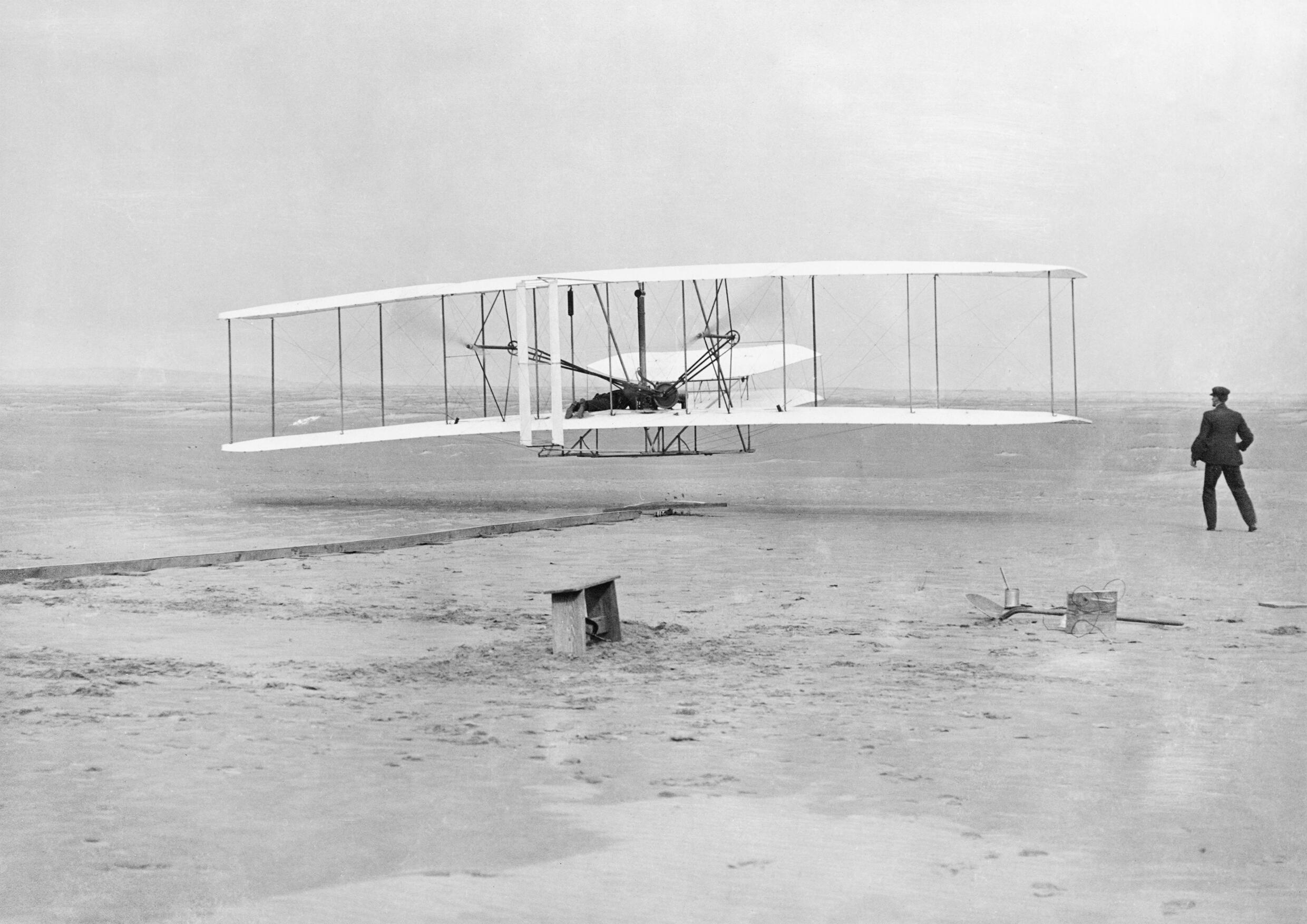
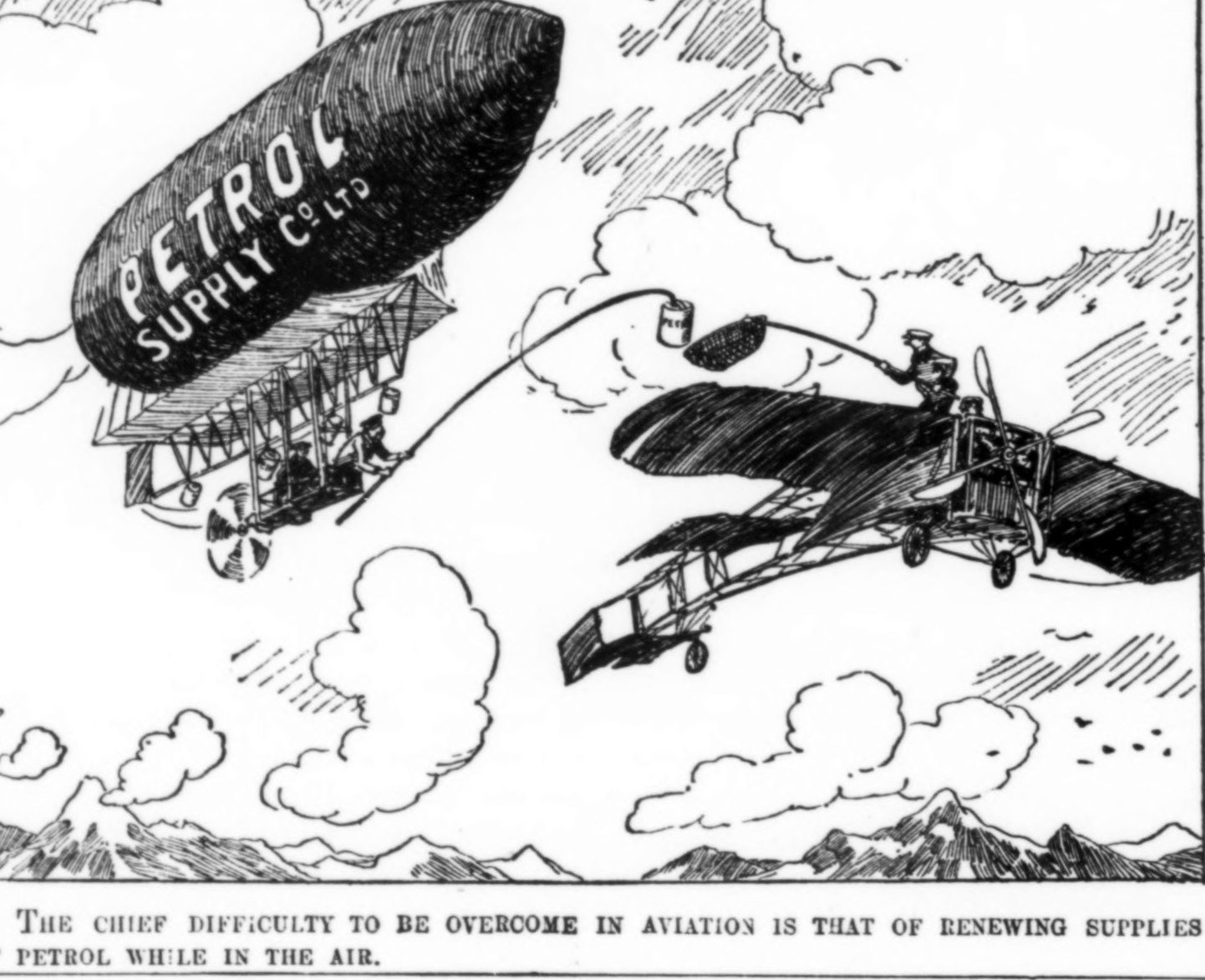
There was no meaningful record of how often these fragile contraptions of wood, wire, and doped canvas fell out of the sky, because they had not been falling out of the sky for very long. The men who agreed to pay out when a flying machine crashed were not consulting a table of frequencies, because no such table existed. They were doing something older and stranger than actuarial science. They were looking at a pilot, at a machine, at a purpose, and putting a number on a feeling.

That number was not a guess in the careless sense. It was an informed act of nerve, backed by capital and hedged by conditions, made by people whose entire trade was the disciplined pricing of things that had never happened before. An underwriter of that era would look at the aircraft itself, at the reputation of the man who built it and the man who intended to fly it, at whether the flight was a sober commercial errand or a reckless attempt at a record, and set his terms accordingly. He could exclude the parts of the risk he would not carry, demand conditions, and keep his line small, so that if he was wrong he would be wounded rather than ruined. Aviation eventually generated its own loss history, as everything dangerous eventually does, and the feeling hardened slowly into data. It did not harden smoothly. Lloyd's had first put its name to aircraft in 1911, writing cover on the flying machines at a public meet, and a single spell of bad weather that broke aeroplane after aeroplane was enough to drive it out of the business the very next year.[1] The market only came back after the First World War, when the Lloyd's underwriter Cuthbert Heath drew the scattered appetite together into the British Aviation Insurance Association in 1919, and it did not feel like routine until Charles Lindbergh had crossed the Atlantic in 1927 and the public had quietly decided that flight was something a person might simply do.[2] The exploded engines and the failed landings became entries in a growing record, and that record, year by year, turned nerve into arithmetic. But for a long stretch at the beginning, the whole business rested on judgment standing in for evidence that had not yet arrived.
[1] Wikipedia — Aviation Insurance (early Lloyd's history) · [2] Lloyd's of London — History
I keep returning to that image, the underwriter squinting at a biplane, because it is the closest historical rhyme I can find for what is happening right now with artificial intelligence. We are back at the beginning of something, and the people whose job is to price its failures are working, once again, largely without the numbers they are trained to need. To understand why coverage for AI is thin, costly, and wrapped in conditions, you have to understand the machine that produces ordinary insurance so smoothly that we forget it is a machine at all. And then you have to watch what happens when a new kind of risk pulls the machine's own supports out from under it.
The Machinery That Usually Works
To understand why AI is so hard to insure, it helps to sit for a moment with why almost everything else is so easy.

The engine underneath property and casualty insurance is loss history. An insurer who has watched ten million houses for twenty years knows, with a precision that borders on the eerie, how many of them will catch fire next year. Not which ones, and that uncertainty is the whole point, but how many. The individual event stays unpredictable while the aggregate becomes almost boring. This is the law of large numbers doing its quiet work: pool enough independent risks together and the chaos of any single case dissolves into the smooth predictability of the crowd.[3] A single coin flip is a mystery; ten million coin flips is close to a fact. The insurer does not need to know which houses will burn any more than a casino needs to know which spin will come up red. It needs only the shape of the crowd, and the crowd, once it is large enough, holds its shape with a reliability that feels almost like a law of nature, because it very nearly is one.
[3] IRMI — Risk Distribution and the Law of Large Numbers
A single coin flip is a mystery; ten million coin flips is close to a fact.
Fire is the textbook example because fire behaves. One house burning in Cleveland tells you nothing about whether a house will burn in Phoenix that same night. The risks are independent, they are diversifiable, and so they can be spread. An insurer collects a small premium from everyone, pays the unlucky few, keeps a margin, and sleeps well because the loss, when it comes, lands on one roof at a time and is quietly funded by the thousands of roofs that did not burn. Auto insurance works the same way. Millions of drivers, each crashing or not crashing for their own private reasons, add up to a curve so stable you can price a policy in seconds on a phone. The teenager pays more and the careful commuter pays less, and both prices come out of the same deep well of accumulated crashes, sorted and studied until the future looks a great deal like the past.
All of this depends on three things quietly holding true. There has to be a credible record of past losses, so that the insurer can reason forward from what has already happened. The losses have to be roughly independent of one another, so that a single event cannot cascade through the whole pool and bankrupt it in a night. And the failure modes have to be familiar enough that the insurer can imagine, and name, the ways things go wrong, so that the policy can be written to cover them and priced to survive them. Fire, theft, collision, water, wind. These are old enemies with known faces. The industry has fought them for so long that it knows their habits, their seasons, their favorite tricks. A hailstorm is a catastrophe, but it is a catastrophe the actuaries have met before, and having met it, they have learned roughly what it costs.
There is one more support worth naming, because it becomes important later: a shared understanding of what actually happened when a loss occurs. When a house burns, everyone agrees a house burned. There was a fire, here is the damage, here is what the policy promised, here is the check. The cause is legible and the coverage is legible, and the two meet without much argument. This legibility is so ordinary that we do not notice how much of insurance quietly depends on it.
Take those supports away and the machinery does not slow down. It stops.
Why AI Pulls the Supports Out
Artificial intelligence, considered as an insurable risk, quietly removes all of them at once. This is worth dwelling on, because it explains why the market is behaving the way it is, and why the behavior is rational rather than merely cautious or greedy.

Start with loss history, or the lack of it. Large-scale deployment of these systems into the ordinary business of the world is recent, and the losses they cause are only beginning to accumulate into anything an actuary could call a record. Some of the harms are slow to surface, buried in decisions that looked fine at the time and revealed themselves as wrong only later. A model that quietly steers a year of lending or hiring in a skewed direction may do its damage long before anyone notices a pattern, and by the time the pattern is visible the loss has already happened many times over. This means that even the losses that have occurred are not all counted yet, and some are not yet recognized as losses at all. An underwriter pricing a model deployment today is closer to that Lloyd's man staring at a biplane than to the auto insurer with twenty years of crash data behind him. The tables the actuary reaches for are mostly empty, and the few entries that exist are recent, uneven, and hard to generalize from.
Then there is the problem that should worry anyone who understands how insurance actually survives: correlation. The fire in Cleveland does not cause the fire in Phoenix, and that independence is the very thing that lets a pool absorb its losses. AI breaks this at the root. Thousands of companies may be running the same handful of foundation models, building on the same libraries, or leaning on the same cloud infrastructure underneath it all. A single flaw in a widely used model, a subtle bias, a security weakness, a failure that appears only under conditions no one thought to test, does not stay politely confined to one policyholder. It can fire everywhere the model is deployed, all at once, in companies that have never heard of one another and share nothing except a dependency they may not even know they have. The losses arrive correlated and simultaneous, precisely the scenario diversification is supposed to protect against and cannot. The industry has seen this shape before, in silent cyber, where a single worm propagating across the internet in hours could strike thousands of insured firms at very nearly the same moment, violating the assumption of independent losses on which insurance mathematics rests.[5] It is the same nightmare that makes earthquakes and pandemics so hard to insure. When everything can go wrong together, spreading the risk stops meaning anything, and the pool that felt so safe reveals itself as one large bet in disguise.
[5] Guy Carpenter — Silent Cyber Explained · The Geneva Association — Generative AI risks for businesses
The third support to fall is the familiarity of the failure modes. An insurer can picture a house fire in exact and useful detail. It is much harder to picture, let alone price, the ways an AI system can betray the people relying on it. A model can be confidently, fluently wrong, delivering a plausible falsehood in the same even tone it uses for the truth, so the error carries no warning label. It can absorb a bias from its training data and quietly launder that bias into thousands of decisions about loans or hiring or medical triage, each one defensible on its own and damning only in the aggregate. It can be manipulated through inputs its designers never imagined, coaxed by a carefully worded prompt into doing exactly what it was built not to do. It can behave impeccably for a year and then, faced with a situation just outside the edge of its experience, do something no human operator ever would, because it has no common sense to fall back on and no instinct that tells it when it has wandered off the map. These are genuinely novel failure modes, and novelty is expensive, because the underwriter cannot fall back on a known face. There is no old enemy here whose habits the industry has already learned. There is only a new one, still discovering what it is capable of, and so, uncomfortably, are we.
A model can be confidently, fluently wrong, delivering a plausible falsehood in the same even tone it uses for the truth, so the error carries no warning label.
Sitting underneath all of this is a quieter difficulty that makes the other three worse. Nobody fully agrees on what counts as an AI loss in the first place. When a business makes a bad decision with the help of an AI tool, where does the fault sit? Does it rest with the model that produced the flawed output, with the vendor who built and sold the model, with the company that deployed it into a consequential process without enough oversight, or with the employee who trusted its answer and acted on it? A claim requires a clear story of cause and coverage, the same clean legibility that lets a house fire become a check. AI harms tend to arrive as tangled stories instead, with the cause smeared across a chain of decisions and the responsibility disputed at every link. Definitional fog of this kind is not a small footnote to the pricing problem. It is the difference between a claim an insurer can adjudicate and a lawsuit an insurer would rather never have insured at all.
No loss history. Correlated exposure. Novel failure modes. Ambiguity about what even counts as a loss. Pull those four threads together and the whole confident apparatus of modern insurance, the same apparatus that prices your car in seconds, finds that it has almost nothing left to hold. Every tool it reaches for was built for a world of independent, familiar, well-recorded, legible risks, and AI is none of those things.
What a Market Does When It Cannot Be Sure

A market does not simply refuse to price a risk it cannot measure. That is not how these people are built. What it does instead is price the uncertainty itself, and the shape of that pricing tells you almost everything about how nervous the room is. There is a recognizable behavior that markets fall into whenever a genuinely new risk arrives, and the behavior has a signature made of three moves.
When underwriters cannot be confident, the first thing that shrinks is capacity. There is only so much appetite to put real money behind a risk nobody can size, so the total amount of coverage available stays small and the individual limits stay tight. An insurer that might happily write a fifty-million-dollar tower of property coverage will offer a thin slice on a risk it cannot model, because it wants to be exposed only as far as it can afford to be wrong. Capacity is the market's way of admitting the limits of its own knowledge in the only language it truly speaks, which is money.
The second thing that moves is price. Uncertainty is not free, and the buyer pays a premium that has to cover the expected loss and, on top of that, the whole fog of things that cannot yet be ruled out. There is a fat and unpriceable tail here, a region of outcomes the underwriter cannot estimate and therefore charges for defensively. A risk you understand is priced to the middle of its distribution. A risk you do not understand is priced against its worst plausible edge, because the edge is where an unmeasured risk can hurt you, and prudence lives out at the edge.
The third thing that arrives is conditions, and they arrive in layers: exclusions that carve dangerous territory out of the policy entirely, warranties that require the insured to have done certain things and to keep doing them, requirements and sub-limits that fence the wild risk down into a shape the underwriter is finally willing to stand behind. A policy for a new risk reads less like a simple promise and more like a negotiated treaty, every clause a small refusal to carry some part of the uncertainty for free.
Two comparisons sit especially close to AI
You can watch this exact pattern in the history of every genuinely new risk, and two comparisons sit especially close to AI. The first is space. When the first commercial satellites were being launched, the industry had only a short and painful record of rockets that had exploded on the pad or tumbled into the sea, and each launch was an expensive experiment with no room for a second attempt. Coverage was written by a small specialist club, charging serious money for tight terms, because every failure was total and the sample of past failures was cruelly small.[6] There was no law of large numbers to lean on when only a handful of these machines had ever flown. The underwriters priced each launch almost as its own singular event, closer to that biplane than to a fleet of family sedans.
[6] Space Insider — A Guide to Space Insurance
The second comparison is cyber, and it is nearer still, because it happened recently enough that its early awkwardness is easy to remember. Cyber insurance was sold at first with almost no actuarial base underneath it. Nobody knew how often a given company would be breached, what a breach would cost, or how many companies would be hit at once when a shared piece of software turned out to be vulnerable, the same correlation problem that haunts AI. So the early cyber market did what nervous markets do. It priced defensively, hedged with conditions, kept its limits modest, and leaned hard on what a company could show about its own security hygiene.[7] Then, as breach after breach accumulated into the beginnings of a real record, the fog began to thin. The tables filled in, the pricing steadied, and coverage that had once felt experimental became something closer to routine. Each of these markets began exactly where AI is now, with judgment doing the work that data would eventually grow up to take over.
[7] Insurance Business Magazine — The early cyber market and security-hygiene conditions
Surplus-lines territory
The institutions that write this kind of business are a particular breed. This is surplus-lines territory, the part of the market built specifically for risks the standard carriers will not touch, backed by the specialist appetite of places like Lloyd's and the deep reinsurance capacity of the large European reinsurers. A small standalone AI-liability market does exist as of 2026, and it lives mostly here: affirmative products such as the Munich Re unit HSB's AI liability cover for small and midsized businesses, launched in March 2026, alongside specialist programs from carriers like Relm[9] and Armilla built to sit beside or over existing policies.[8] These are the descendants, in spirit and often in fact, of the same underwriters who once put their names to biplanes and satellites. Their whole history is the pricing of the barely priceable, and it is not an accident that they are the ones showing up first. The standard carriers will arrive later, once the risk has been tamed into a table. The specialists arrive now, while the risk is still wild, because taming wild risk for a price is precisely the thing they exist to do.
[8] Reinsurance News — Munich Re's HSB launches AI liability insurance (Mar 2026); Testudo / Fintech Global — capacity to $9.25m, since increased to $10m (Aug 2026) · [9] Relm Insurance — PontaAI
And because they have so little data about the risk itself, they lean on the one thing they can actually inspect: documentation. When an underwriter cannot consult a loss table, the underwriter consults you. Increasingly, the terms of AI coverage in 2026 are conditioned on what a company can prove about how it governs its models.[10] Underwriters want a real inventory of which AI systems are running and where, so that the exposure is at least visible. They want evidence of genuine human oversight over consequential decisions, so that a model is not left to act unsupervised where the stakes are high. They want testing for bias, so that the laundering of prejudice into decisions is caught before it becomes a pattern of claims. And they want a worked-out plan for what happens when something goes wrong, so that a failure is contained rather than left to metastasize. Governance documentation has become the actuarial table's understudy. In the absence of data about the risk, the underwriter reaches for data about the discipline of the company carrying it, and treats that discipline as the best available forecast of how the risk will behave.
[10] Trustible — The AI Insurance Risk Assessment Process
The Lever You Actually Control
Put all of this together and the situation facing a buyer stops being mysterious and starts being almost logical.
Standalone AI coverage is scarce because capacity is thin, and capacity is thin because no one wants to put large money behind a risk they cannot size. It is expensive because uncertainty is expensive, and someone has to be paid to carry the part of the risk that no table has yet described. It comes wrapped in conditions because conditions are how underwriters tame a risk they cannot measure, fencing the wild parts out until what remains is something they can stand behind. And it is gated on documentation because documentation is the only credible evidence available when the loss tables are still mostly blank. None of this is arbitrary, and none of it is the market being difficult for the sake of it. It is the direct and honest consequence of trying to price a risk that resists every tool the industry normally uses.
That has a hard edge to it, and it would be dishonest to pretend otherwise. A buyer walking into this market should expect thin limits, firm prices, and a stack of conditions, and should not read any of that as a personal insult or a temporary glitch. But the same logic that produces the hard edge points at something oddly hopeful, because it tells you exactly where your leverage sits. You cannot lower the industry's uncertainty about AI as a whole category. You cannot manufacture a loss history that does not exist yet, and you cannot uncorrelate the world's shared dependence on a few common models. Those are conditions of the era. They will resolve slowly, the way aviation's did and the way cyber's has begun to, one accumulated year at a time, and no single buyer can hurry them.
What you can control is the second thing the underwriter looks at. When there is no table to consult, the company that shows up with a real model inventory, with human oversight that amounts to more than a sentence in a policy, with actual bias testing and a rehearsed incident response, is a company the underwriter can say yes to on better terms. The documentation does not eliminate the risk, and no honest underwriter would claim that it does. What it does is serve as the clearest available signal that the risk is being managed by people who take it seriously, and in a market starved of data, a credible signal is worth a great deal. In a market pricing the unmeasurable, the thing you can prove about your own governance is the closest thing to a rate you get to set yourself.
That is why the rest of this site is built the way it is. The comparison table exists so you can see plainly how thin and how conditioned the current offerings really are, and stop expecting the seconds-on-a-phone experience the auto market spoiled us all into treating as normal. The coverage-readiness checklist exists because the documentation underwriters now demand is documentation you can build before you ever ask for a quote. Building it well and building it early is the single most useful thing you can do to move your own price, because it converts the one part of the risk you actually govern into evidence the underwriter can use.
The underwriter squinting at the biplane a century ago could not know how safe flight would eventually become. He could not know that this rattling machine of wire and canvas would one day carry millions of people across oceans as a matter of dull routine, priced by tables so mature that the risk barely registers. He could only look hard at the machine in front of him, and at the person flying it, and decide whether it had been prepared with care and flown with judgment. That is still, in the end, the question. The technology has changed beyond all recognition. What the underwriter is really asking has not changed at all.
The underwriter's ledger
Why AI is hard to price
Eight entries in the same ledger the underwriter keeps, each one a reason the ordinary machinery of insurance struggles to close its books on artificial intelligence.
No loss history
Large-scale deployment is recent and its harms are still accumulating, so the actuarial tables underwriters reach for are mostly empty.
Slow-surfacing harm
Some AI failures hide inside decisions that looked fine at the time and reveal themselves only later, so even the losses that have happened are not all counted yet.
Correlated risk
Thousands of companies lean on the same few models and platforms, so a single flaw can trigger many simultaneous claims and defeat the diversification insurance depends on.
Novel failure modes
Confident wrong answers, laundered bias, manipulation through inputs, and out-of-distribution behavior have no familiar precedent to price against.
Definitional ambiguity
When AI contributes to a bad outcome, fault and causation are genuinely unclear, which makes a claim hard to adjudicate and a lawsuit easy to start.
Thin capacity
The standalone market that exists in 2026 is small, mostly surplus lines with Lloyd's and Munich Re-style backing, and it charges accordingly.
Defensive pricing
With the worst outcomes unmeasured, underwriters price against the edge of the distribution rather than its middle, loading the premium for surprises no table has yet described.
Documentation as proxy
With no data about the risk, underwriters lean on data about the company, conditioning terms on governance evidence like model inventories, human oversight, bias testing, and incident response.
Before you go
Your endorsements, however, are the thing that will actually pay a claim, or fail to.
The era of favorable silence around AI is closing. The way to know where you actually stand is to read what your own endorsements now say out loud, line by line, before a claim rather than after.
See where your E&O and CGL actually standDoes your E&O or CGL cover AI? The plain-English breakdown.
Works Cited
Every checkable claim in this essay is sourced below, historical and present-day alike, with primary and specialist sources preferred. The numbers match the citation after the relevant paragraph. Where a market claim rests on carrier or trade reporting rather than a filed figure, the note at the end of the list says so.
- 1Wikipedia, Aviation insurance. Records Lloyd's first aviation cover at a 1911 flying meet and its withdrawal from the class after bad-weather losses the following year. ↩
- 2Lloyd's of London, History of Lloyd's. Background on the market's revival after the First World War, the founding of the British Aviation Insurance Association (1919) under Cuthbert Heath, the maturing of demand through the 1920s after Charles Lindbergh's 1927 transatlantic flight, and Lloyd's enduring role as the home of specialty and surplus-lines underwriting. ↩
- 3International Risk Management Institute (IRMI), Risk Distribution: A History and the Law of Large Numbers. On pooling numerous small, independent risks so that the average of a large number of losses stays close to the expected loss. ↩
- 4Wikipedia, Edmond Halley. Records Halley's 1693 analysis of age-at-death built on the Breslau statistics supplied by Caspar Neumann, and its influence on the development of actuarial science. ↩
- 5Guy Carpenter, Silent Cyber Explained, on unquantified cyber exposure sitting inside traditional policies; and The Geneva Association, Generative AI risks for businesses, noting that, like cyber, generative-AI losses are more correlated, can spread quickly across insureds, and may hit many lines at once. ↩
- 6Space Insider, A Guide to Space Insurance. On the small specialist market that prices launch risk, where a single failure can incinerate hundreds of millions in seconds, and where Lloyd's underwrote the first satellite policy (Intelsat I, "Early Bird") in 1965. ↩
- 7Insurance Business Magazine, Why this soft market could be the most dangerous yet for cyber insurance. On the early cyber market tightening terms and conditioning coverage on security hygiene (MFA, endpoint protection, encryption), which improved loss ratios as a record accumulated. ↩
- 8Reinsurance News, Munich Re's HSB launches AI liability insurance for small businesses (March 18, 2026), an affirmative product covering AI-related losses that some general liability policies exclude; and Testudo via Fintech Global, Testudo expands AI liability capacity to $9.25m, on surplus-lines capacity backed by Lloyd's syndicates; limit since increased to $10m per insured (August 2026). ↩
- 9Relm Insurance, PONTAAI: AI insurance coverage beyond existing liability programs, an excess difference-in-conditions / wrap policy built to sit over the exclusions and gaps in existing programs. ↩
- 10Trustible, The AI Insurance Risk Assessment Process. On underwriters requesting an AI system inventory, model documentation, bias-testing results, evidence of human oversight, and a governance audit trail, increasingly referenced against the NIST AI RMF. ↩
A note on the market claims. The characterizations of the present-day AI insurance market (thin capacity, defensive pricing, and coverage gated on governance evidence) rest on the carrier and trade reporting cited above and on the structural logic of how insurance prices a risk whose loss history has not yet accumulated. Specific premium and limit figures are not stated because they vary by insured and are not publicly filed. Does your E&O or CGL cover AI?