The History of Insurance · Part 3 of 3
Insuring the Machine Age
From the Factory Floor to Artificial Intelligence
How insurance followed the machine out of the coffeehouse and onto the factory floor, into the crowded roads and the invisible networks, and finally to a policy written for an artificial mind.
Joel R. Singh
Underwritten
About 13 minutes
2026-07-24
Where we left off
By the eighteenth century, insurance had grown from a merchant's hunch into a data-driven science and a genuine business, priced by mortality tables and traded in the coffeehouses of London. What it had not yet met was the machine. The two centuries that followed would hand the industry a stream of dangers that no shipowner or fire brigade had ever imagined, and each one would test whether the oldest bargain in commerce could stretch to cover it.
The factory and the grand bargain
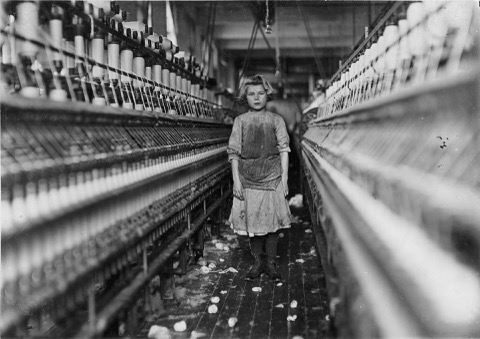
The nineteenth century did more than expand the insurance industry. It manufactured entirely new categories of risk for that industry to cover, because industrialization created dangers that had simply never existed before. A craftsman's shop might injure the craftsman. A factory, with its unguarded belts, its boilers, and its relentless pace, maimed and killed workers at a scale that was genuinely unprecedented. Men lost hands to presses. Women and children were caught in machinery that never stopped for them. The human stakes here were not abstract. A single accident could turn a wage-earner into an invalid and his family into paupers in the span of an afternoon, and for most of the nineteenth century the law offered them almost nothing.
The reason was a set of legal doctrines that made it nearly impossible for an injured worker to recover anything from the employer. If a co-worker's mistake contributed to the injury, the employer often walked free. If the worker had known the job was dangerous and did it anyway, that was treated as consent to the risk. The result was a grim arithmetic in which the people who bore the physical cost of industry also bore the financial cost of its accidents.
The first durable answer came from Germany. In the 1880s, under Chancellor Otto von Bismarck, the German state built a system of compulsory accident insurance for workers, part of a broader set of social insurance laws that also covered sickness and old age. The logic was a trade, and it is usually called the grand bargain. Workers gave up their right to sue their employers for most workplace injuries, and in exchange they received guaranteed compensation that did not depend on proving anyone was at fault. A crushed hand was paid for whether or not a lawyer could pin the blame on the foreman.
The grand bargain · Germany, 1880s
Under Bismarck, Germany built compulsory workers' accident insurance in the 1880s, part of a wider set of social insurance laws. Workers surrendered the right to sue for most workplace injuries; in exchange they received compensation that did not depend on proving fault. A crushed hand was paid for whether or not the blame could be pinned on anyone.
Workers traded the small chance of a large jury award for the near-certainty of a modest, prompt payment. Certainty replaced the courtroom lottery.The grand bargain of workers' compensation
The United States arrived at the same bargain a generation later, state by state rather than all at once. Wisconsin passed the first workers' compensation law to survive a court challenge in 1911, and most industrial states followed over the next decade. The bargain was the same everywhere. Certainty replaced the courtroom lottery. A worker traded the small chance of a large jury award for the near-certainty of a modest, prompt payment, and an employer traded unpredictable lawsuits for a predictable cost that could be budgeted like any other. That predictable cost is exactly the kind of thing an insurance market is built to carry, and so workers' compensation insurance became one of the largest lines of coverage in the modern economy. A social decision about who should bear the cost of industrial injury called an entire insurance market into being.
A machine in every driveway
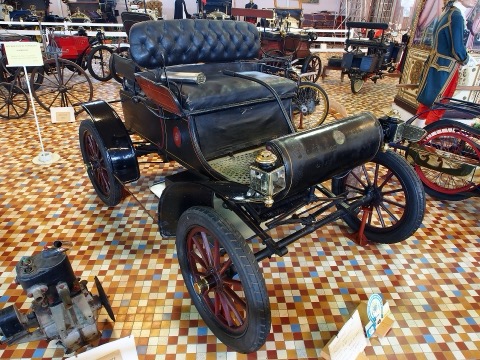
Then came a machine that could kill a stranger, and people took it home with them.
The automobile arrived at the turn of the twentieth century as a curiosity for the wealthy, and within a few decades it had become an ordinary household possession. What made it different from almost every risk that came before was the direction the danger pointed. A house fire mostly threatened the person who owned the house. A car threatened everyone else. A moment of inattention behind the wheel could injure or kill a pedestrian, a child, or the family in the oncoming vehicle, none of whom had any say in how carefully the driver drove.
This is where liability enters the story in earnest, so it is worth defining plainly. Liability is legal responsibility for harm you cause to someone else, and liability insurance is coverage that steps in to pay when you are found responsible, handling both the damages you owe and the cost of defending you. The earliest American automobile liability policies appeared as early as 1897 to 1898, when cars were still rare enough to be exotic. Travelers wrote an early auto liability policy for Gilbert Loomis in 1897, and issued one to Dr. Truman Martin on February 1, 1898. As the roads filled, coverage that had started as a novelty for a handful of motorists became a mass product carried by ordinary families, and eventually a legal requirement in most places. The reasoning was simple and humane. If your machine harms a stranger, there should be money behind you to make that stranger whole, rather than a driver of modest means and a victim with a ruined life and no recourse.
Auto insurance reshaped personal insurance more than any product before it, because it put a liability policy in the hands of the general public. Insurance stopped being something a merchant or a landlord bought and became something nearly every adult carried. The pattern underneath it was the one that had governed the industry since the factories: a new machine arrives, the losses arrive alongside it, and the market assembles a pool large enough to absorb them.
The liability century
The twentieth century kept widening the circle of who could be held responsible, and insurance kept pace with each expansion.
Aviation created risks measured in lost lives and in hulls worth fortunes, and it did so on a scale that could bankrupt any single carrier, which pushed aviation coverage toward the same pooling and reinsurance logic that Lloyd's had pioneered for ships. Product liability law matured over the century, gradually holding manufacturers responsible for harm caused by the things they made, sometimes years after the sale and far from the factory gate. A defective product could injure a consumer who had never met the maker and never would, and the law slowly decided that the maker should answer for it anyway. Insurance grew up around that decision to fund it.
As corporations swelled and their shareholders grew more willing to sue, a coverage called directors and officers liability, usually shortened to D&O, arose to protect the individual people running a company from personal financial ruin over their business decisions. An executive could make a defensible call that a court later second-guessed, and without coverage the judgment might come out of that executive's own pocket. D&O insurance meant capable people could serve in leadership without betting their houses on every decision.
The widening circle of liability
Aviation pushed coverage toward Lloyd's-style pooling and reinsurance. Product liability held manufacturers answerable for harm caused years after a sale. Directors and officers liability protected executives from personal ruin over business decisions. Each time the law named a new party who could be blamed, a matching form of coverage grew up to make that responsibility survivable.
A single pattern runs through all of it. Insurance does far more than trail along behind risk at a safe distance, because the thing it truly answers to is the way a society decides who should be blamed when something goes wrong. Every time the law recognized a new kind of harm, or named a new party who could be held responsible for causing it, a matching form of coverage grew up around that decision so that the responsibility became something a person or a company could actually survive. Keep that idea close, because the coverage now forming around artificial intelligence is the newest instance of exactly this movement, and it answers to a new technology and to the still-unsettled question of who is supposed to pay when that technology causes real harm.
The digital template
The clearest rehearsal for the AI moment was cyber insurance, and understanding it makes the AI chapter far easier to read.
In the late 1990s, as businesses moved their operations onto networks and the internet, insurers began writing coverage for a risk with no physical form at all. There was no burning building and no wrecked car. There was a data breach, a network failure, and later ransomware and privacy violations, all of them invisible right up to the moment they became catastrophic. Cyber was hard to insure for reasons that will sound familiar by the end of this article. The risk was intangible, so an underwriter could not walk the property the way a fire inspector once walked a warehouse. It changed faster than the policies written to cover it, mutating from one attack pattern to the next within a single policy year. And it was systemic, because a single vulnerability in a widely used piece of software could be exploited across thousands of companies at once, striking many policyholders in the same instant and undermining the very diversification that makes pooling work.
Cyber insurance · late 1990s onward
Cyber taught insurers three lessons they are now applying to AI. Demand security controls as a condition of coverage. Guard against silent exposure, where new losses get accidentally covered under old policies never priced for them. And reprice constantly, sometimes carving out an explicit exclusion, because a fast-moving, correlated, intangible risk can drain a pool otherwise. An exclusion is simply a clause naming something the policy will not pay for.
Insurers learned several hard lessons in cyber, and they are now applying every one of them to AI. They learned to demand security controls as a condition of coverage, so that a policy came with a checklist of protections the insured had to have in place before the coverage would respond. They learned to worry about what they call silent exposure, which is the danger that losses of a new kind get accidentally covered under old policies that were never written or priced for them, leaving the insurer on the hook for a risk it never knowingly accepted. And they learned that a fast-moving, correlated, intangible risk has to be repriced constantly, and sometimes carved out with an explicit exclusion, simply to keep the pool solvent. An exclusion, in plain terms, is a clause that names something the policy will not pay for. Cyber insurance is the template. AI insurance is being built with that template already in hand, which is why the AI market has moved through in a few years what cyber took over a decade to work out.
The AI chapter
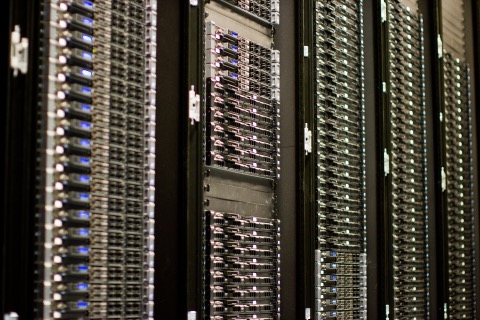
When generative AI moved into everyday business use around 2023, it opened a coverage gap almost overnight.
A model that drafts marketing copy, screens job applicants, answers customers, or writes code can also defame a real person, infringe a copyright, discriminate against a protected group, breach a contract through a confidently stated falsehood, or simply fail in a way that costs a company real money. The harm is concrete and the dollars are real. The trouble was that the policies most companies were carrying had been written long before anyone imagined an autonomous, error-prone text generator sitting inside a business process, making decisions and producing output at machine speed.
That mismatch created what the industry now calls silent AI risk. It is the uncertainty over whether a standard general liability policy, a professional liability policy, or a media policy would actually respond to a loss caused by an AI system, given that none of those policies were designed with such a system in mind. Silence of this kind is dangerous for both parties. Policyholders cannot be confident they are covered when they most need to be, and insurers cannot be confident how much AI exposure they have quietly accumulated across their entire book of business, spread invisibly through policies that never mention AI at all. It is the same silent-exposure problem that haunted cyber, arriving again in a new costume.
A correlated failure that strikes thousands of companies all relying on the same foundation model would be the AI equivalent of the Great Fire of London.The systemic risk of the AI era
The market has moved to end the silence, and it has done so in two directions at once.
Drawing the line: exclusions
On one side, insurers began carving AI risk out of standard policies so that it would no longer be covered by accident. Verisk, through its Insurance Services Office, drafts the standard policy forms that much of the American insurance market relies on, and it introduced a set of generative AI endorsements that began attaching to commercial general liability renewals from January 1, 2026. An endorsement is a document that amends a standard policy, adding or removing coverage. The main forms in this set are numbered CG 40 47, CG 40 48, and CG 35 08. The ISO form text itself is available only to Verisk subscribers, so the form numbers, effective date, and scope described here follow trade-press reporting rather than the primary form text. Broadly speaking, one form excludes generative AI exposures across the core bodily injury, property damage, and personal and advertising injury coverages, a companion form applies a narrower exclusion to the advertising injury coverage alone, and a third extends the exclusion into the products and completed operations part of the policy. Verisk defines generative AI inside the forms in general terms, as a machine-based system trained on data that can create content such as text, images, audio, video, or code.
Verisk AI endorsements · effective 1 January 2026
Verisk, through its Insurance Services Office, introduced generative AI endorsements attaching to commercial general liability renewals from 1 January 2026. Forms CG 40 47, CG 40 48, and CG 35 08 carve AI exposures out of the standard policy across bodily injury, property damage, advertising injury, and products coverages. The forms are optional: Verisk drafts them, but each carrier decides whether to adopt them.
These endorsements are optional, which is an important detail. Verisk drafts them, but each carrier decides whether to adopt them, and industry reporting indicates strong early interest, with multiple insurers filing to use the new wordings soon after they appeared. Trade coverage names carriers among the early filers, including W.R. Berkley, Chubb, and Travelers. The intent behind the exclusions is easy to misread. The goal is not to abandon AI risk and walk away from it. The goal is to stop covering that risk by accident, so that it can be moved out of the shadows, named plainly, and then covered on purpose and priced honestly. An exclusion in one policy is very often the first step toward a dedicated policy somewhere else.
Naming the risk: affirmative coverage
On the other side, that dedicated policy has already arrived, in the form of affirmative AI coverage. Affirmative coverage means a policy that is written from the start to pay for a named risk, stated in plain language rather than left to argument. Where an exclusion says this policy will not pay for AI failures, an affirmative AI policy says clearly that paying for AI failures is exactly what it is here to do.
In April 2025, according to a joint announcement from the parties, Armilla Insurance Services, operating as a coverholder at Lloyd's, launched a standalone AI liability policy underwritten by Lloyd's underwriters including Chaucer. The policy is built around an affirmative trigger tied to AI underperformance, meaning it is designed to respond when an AI system fails to perform as intended, produces critical errors, or generates hallucinations and inaccuracies that lead to damages, and it covers the resulting legal costs and liabilities. Munich Re had been working in this territory for years before the generative wave, through a program called aiSure that launched in 2018 and took a performance-guarantee approach, stepping in when a vetted AI system failed to meet agreed standards of performance. Newer specialty entrants have moved into the same emerging-technology space, including Relm, a Bermuda specialty insurer with dedicated AI products, and Coalition, which has embedded AI coverage within its cyber and tech errors-and-omissions products. The young market has begun to fill out with several dedicated products rather than one. I have kept the specific limits and terms of these products deliberately general here, because they shift as the market matures, and this is a history rather than a shopping guide.
The technology is genuinely unprecedented. The instinct behind the coverage is close to four thousand years old.AI liability, the ancient instinct in modern dress
What ties the exclusions and the affirmative policies together is a single instinct, reappearing in modern dress. An affirmative AI policy asks the very questions that Edmond Halley's mortality tables and the Philadelphia Contributionship's building inspectors asked centuries ago. How likely is this thing to fail? How much would that failure cost if it happened? And what controls can the insured put in place to lower the odds before we agree to carry the rest? The underwriter answers by pooling the risk across many buyers, so that the company whose model fails badly this year is paid from the premiums of the many companies whose models held up. The technology is genuinely unprecedented. The instinct behind the coverage is close to four thousand years old.
Where the line runs next
Insurance has always trailed innovation by a few years and then caught up, and the gap between a new risk arriving and a mature market ready to cover it is precisely where uncertainty and lawsuits tend to live. Artificial intelligence sits squarely in that gap today. The history behind it suggests how the gap eventually closes. Exclusions and affirmative products will coexist and compete for a while, pushing the risk out of the standard policies and into dedicated ones. Data will accumulate as real AI losses get logged and studied, in much the way Halley once studied the birth and death records of Breslau, and the pricing that starts as educated guesswork will sharpen toward something closer to a science. Coverage will increasingly arrive bundled with requirements, so that documented testing, governance, and controls become the price of admission, exactly as fire marks on insured buildings and inspections of insured houses once were.
There will be surprises along the way. A correlated failure that strikes thousands of companies all relying on the same foundation model would be the AI equivalent of the Great Fire of London, a single event that lands on countless policyholders at once, and whether the market has priced for that possibility will only become clear on the day it finally happens. Yet the direction of travel is not really in doubt. The same species that once split its cargo across many boats, buried its soldiers through the Roman collegia, and wrote its first policies over cups of coffee is now learning, unevenly and in real time, to pool the risk of thinking machines. It will get better at it the way it always has, one catastrophe and one correction at a time.
That is where this series comes to rest. Across three parts we have followed a single unbroken thread, from a clause pressed into Babylonian clay, through the coffeehouse and the mortality table, past the factory floor and the crowded roads and the invisible networks, all the way to a policy written for an artificial mind. The newest chapter of insurance is not a break from that long story. It is the story, still being written, in the same hand that has been writing it all along.
This article is an informational history and is not insurance or legal advice.
Sources & Notes
A note on the Verisk endorsements: the ISO standard form text is available only to Verisk subscribers, so the form numbers, effective date, and scope described above rely on trade-press reporting rather than the primary form text.
- Big "I" (Independent Insurance Agents & Brokers of America), coverage of the ISO generative AI endorsements and the January 1, 2026 effective date. IndependentAgent.com, 2025. https://www.independentagent.com/
- "ISO files generative AI exclusions for general liability." The Insurer, July 10, 2026. https://www.theinsurer.com/
- Coverage of carriers filing the ISO generative AI endorsements (W.R. Berkley, Chubb, Travelers, and others). Claims Journal, 2026. https://www.claimsjournal.com/
- "Armilla Insurance Services Launches AI Liability Insurance Backed by Lloyd's, Chaucer Group and Others." PR Newswire, April 30, 2025. https://www.prnewswire.com/
- Munich Re, "aiSure" product page (program launched 2018). https://www.munichre.com/ ; see also "Munich Re's aiSure," Carrier Management, 2022. https://www.carriermanagement.com/
- Relm Insurance, announcement of its AI insurance products. PR Newswire, January 2025. https://www.prnewswire.com/ ; Coalition, "AI-related coverage" product information. https://www.coalitioninc.com/
- Deutsche Gesetzliche Unfallversicherung (DGUV), history of the German Accident Insurance Law of July 1884. https://www.dguv.de/ ; Smithsonian, on Bismarck's social insurance reforms. https://www.si.edu/
- Wisconsin Legislative Reference Bureau, on the 1911 Wisconsin workers' compensation law; contrast Ives v. South Buffalo Railway Co., 201 N.Y. 271 (1911), which struck down New York's earlier statute.
- "The First Auto Insurance Policy" (Gilbert Loomis, 1897; Dr. Truman Martin, February 1, 1898). Insurance Journal, February 27, 2008. https://www.insurancejournal.com/
The machine age
Eight milestones from the factory floor to the AI policy
A century and a half in which each new machine brought a new danger, and the oldest bargain in commerce stretched, once again, to cover it.
-
1880s
Workers' compensation (Germany)
Under Bismarck, Germany builds compulsory workers' accident insurance. Guaranteed no-fault compensation replaces the right to sue: the grand bargain.
-
1911
US workers' comp takes hold
Wisconsin passes the first US workers' compensation law to survive a court challenge. Most industrial states follow within a decade.
-
c. 1900
Automobile insurance
The earliest American auto liability policies appear as early as 1897 to 1898. A machine that threatens strangers puts a liability policy in ordinary hands.
-
Mid-20th c.
Aviation and product liability
Aviation adopts Lloyd's-style pooling and reinsurance. Product liability law makes manufacturers answerable for harm long after a sale.
-
late 1990s-2010s
Cyber insurance
Insurers cover an intangible, fast-moving, systemic risk. The lessons of controls, silent exposure, and constant repricing become the template for AI.
-
2023
The generative AI coverage gap
Generative AI enters everyday business use and opens a coverage gap overnight. Silent AI risk haunts policies never written with such systems in mind.
-
April 2025
Affirmative AI liability
Armilla, a Lloyd's coverholder, launches a standalone AI liability policy underwritten at Lloyd's, triggered by AI underperformance and hallucination.
-
1 Jan 2026
Verisk AI exclusions
Verisk's generative AI endorsements (CG 40 47, CG 35 08, and companions) begin attaching to general liability renewals, carving AI out of standard policies.
The History of Insurance · Part 3 of 3
This is where the series comes to rest. Across three parts we followed a single unbroken thread, from a clause pressed into Babylonian clay, through the coffeehouse and the mortality table, all the way to a policy written for an artificial mind.
The series closes · Part 3 of 3
The newest chapter is the story continuing
The coverage now forming around artificial intelligence is not a break from a four-thousand-year story. It is that story, still being written, in the same hand that has been writing it all along. The oldest bargain in commerce has simply reached its newest risk.
Part 1, "The Oldest Bargain," opens the series with the clay tablet and the tradeable premium. Part 2, "Fire, Coffee, and Mathematics," carries it through the Great Fire of London and the mathematics of mortality.