Insuring the Machine Age, in brief
The 4-minute version of Insuring the Machine Age.
Joel R. Singh
Underwritten
2026-09-10
By the 1760s insurance had its machinery. There was pooling, the priced premium, loss prevention, mutual ownership, and the math to hold it together. What it had not met was the machine.
The factory and the grand bargain
Industry made dangers that had never existed. Factories had unguarded belts and boilers, and they maimed workers at a scale nobody had seen. One accident could ruin a wage earner and his family in an afternoon.
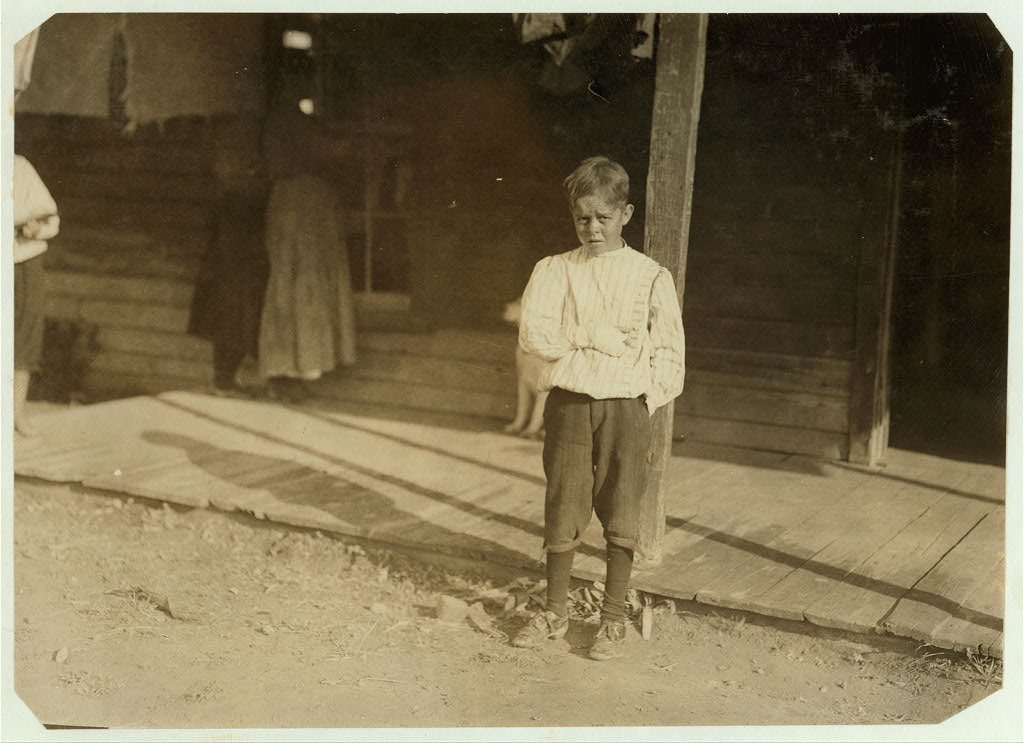
The law offered them almost nothing. If a co-worker's mistake played a part, the employer often walked free. If the worker knew the job was dangerous and did it anyway, that counted as consent.
Germany answered first. In the 1880s, under Bismarck, the state built required accident insurance for workers. The trade is called the grand bargain. Workers gave up the right to sue over most injuries at work. In exchange they got paid without having to prove fault. A crushed hand was paid for either way.
The United States followed a generation later, state by state. Wisconsin passed the first law to survive a court challenge in 1911. Certainty replaced the courtroom lottery, and a predictable cost is what an insurance market is built to carry.
A machine in every driveway
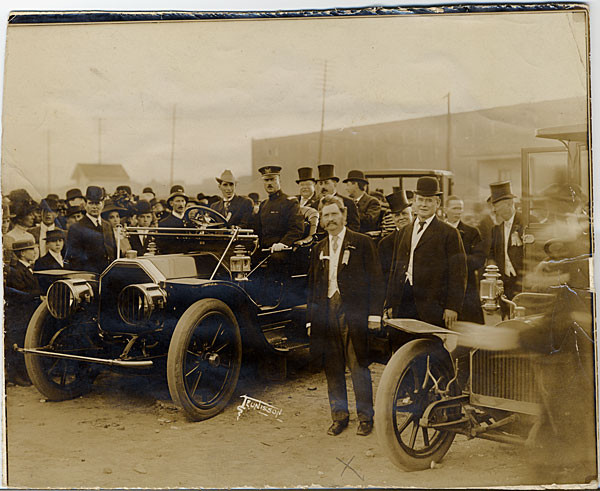
Then came a machine that could kill a stranger, and people took it home.
Older risks mostly pointed inward. A house fire threatened the owner. A car threatened everyone else: a pedestrian, a child, the family in the oncoming lane. None of them chose how carefully the driver drove.
This is where liability enters. Liability is legal responsibility for harm you cause someone else. Liability insurance pays when you are found responsible, covering the damages and the cost of defending you.
The first American auto liability policies appeared in 1897 and 1898. As the roads filled, that novelty became a mass product, then a legal requirement. If your machine harms a stranger, there should be money behind you to make that stranger whole.
The liability century
The century kept widening who could be blamed, and cover kept pace. Product liability law held makers answerable for harm done by things they made, years after a sale. Directors and officers cover protected company leaders from ruin over a business decision.
One pattern runs through all of it. Insurance answers to how a society decides who is to blame. Each time the law named a new harm, cover grew up around that decision.
Cyber was the rehearsal
From the late 1990s insurers wrote cover for a risk with no physical form. No burning building, no wrecked car. Instead a data breach, a network failure, later ransomware.
Cyber was hard for three reasons that will sound familiar. It was invisible, so no underwriter could walk the property the way a fire inspector walked a warehouse. It changed faster than the policies written to cover it. And one flaw in widely used software could hit thousands of firms at once, which breaks the spreading that makes pooling work.
Insurers learned three lessons and are using every one on AI. Demand security controls as a condition of cover. Watch for silent exposure, where a new loss gets covered by accident under an old policy never priced for it. And reprice often, sometimes cutting a risk out with an exclusion.
The AI chapter
When generative AI reached everyday business use around 2023, it opened a gap almost overnight. A model that drafts copy, screens applicants or writes code can also defame someone, infringe a copyright, discriminate, or fail in a way that costs real money. The policies firms carried were written long before anyone imagined that.

The industry calls the result silent AI risk. Nobody can say whether a standard liability policy would pay for an AI loss, because none were designed with one in mind. That is dangerous for both sides. Buyers cannot be sure they are covered. Insurers cannot be sure how much AI risk they have built up.
The market moved two ways at once. Insurers began cutting AI out of standard policies so it would stop being covered by accident. Verisk's generative AI endorsements started attaching to general liability renewals from 1 January 2026. Dedicated policies also arrived that name the risk on purpose. Armilla launched a standalone AI liability policy at Lloyd's in April 2025, built to pay when a system underperforms or produces damaging errors.
Where the line runs next
An affirmative AI policy asks what Halley's tables and Franklin's inspectors asked. How likely is this to fail? What would that failure cost? What controls can you put in place before we carry the rest?
Expect pricing to sharpen as real losses pile up. Expect cover to arrive with requirements attached, exactly as fire marks and house inspections once were. The open question is a shared failure: thousands of firms relying on one model, all failing together. That would be the AI version of the Great Fire.
The technology is new. The instinct behind the cover is close to four thousand years old.
Works Cited
- 1Big "I" (Independent Insurance Agents & Brokers of America), coverage of the ISO generative AI endorsements and the January 1, 2026 effective date https://www.independentagent.com/
- 2"ISO files generative AI exclusions for general liability." The Insurer, July 10, 2026. https://www.theinsurer.com/
- 3Coverage of carriers filing the ISO generative AI endorsements (W.R. Berkley, Chubb, Travelers, and others) https://www.claimsjournal.com/
- 4"Armilla Insurance Services Launches AI Liability Insurance Backed by Lloyd's, Chaucer Group and Others." PR Newswire, April 30, 2025. https://www.prnewswire.com/
- 5Munich Re, "aiSure" product page (program launched 2018). https://www.munichre.com/
- 6Relm Insurance, announcement of its AI insurance products https://www.prnewswire.com/
- 7Deutsche Gesetzliche Unfallversicherung (DGUV), history of the German Accident Insurance Law of July 1884. https://www.dguv.de/
- 8Wisconsin Legislative Reference Bureau, on the 1911 Wisconsin workers' compensation law
- 9"The First Auto Insurance Policy" (Gilbert Loomis, 1897; Dr. Truman Martin, February 1, 1898) https://www.insurancejournal.com/
---
Informational only. This essay is a general history and is not insurance advice, legal advice, or a recommendation of any policy. Dates and attributions follow the conventional historical record and are approximate where the sources themselves are. Research and writing by Joel R. Singh for iSinghLabs Inc.