The History of Insurance · Part 1 of 3
The Oldest Bargain
How Humans First Learned to Share Risk
The long story of how humans learned to price and share the risks no one survives alone, from a clause pressed into Babylonian clay to the merchant houses of Genoa, where the tradeable premium was born.
Joel R. Singh
Underwritten
About 12 minutes
2026-07-22
The oldest bargain
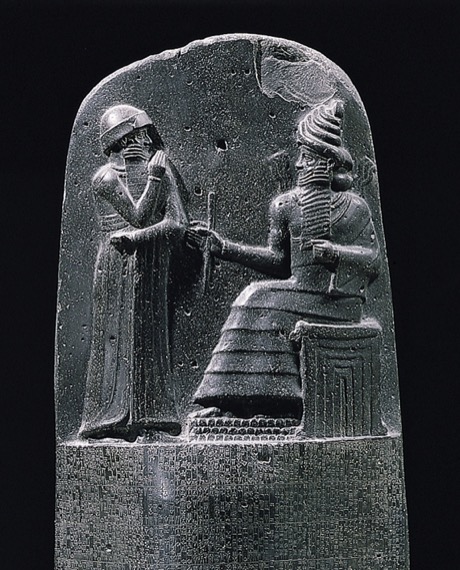
Around 1750 BCE, a single clause was pressed into wet clay in the Code of Hammurabi. A Babylonian merchant who had borrowed money to finance a trading voyage could, under certain agreed terms, be released from ever repaying that loan if his cargo happened to be lost along the way to storm or to theft. In return for carrying that danger on his own books, the lender charged a somewhat higher rate, and the borrower, for his part, paid that extra amount willingly, because what he was really buying was a night of untroubled sleep. Neither party ever used the word "insurance," and yet the bargain sitting quietly at the heart of the arrangement is the very same one a corporate risk manager signs today: I will pay you a known and smaller amount now, so that I never have to bear an unknown and far larger loss entirely alone.
The Hammurabi clause · c. 1750 BCE
The bottomry loan is one of the earliest written traces of risk transfer. A lender advanced money for a voyage and forgave the debt if the ship was lost, charging extra up front to carry that risk. This was not an act of charity and it certainly was not a wager, but it became a way for one person to spread the weight of a single catastrophe across many other shoulders.
That arrangement, which later legal writers would call the bottomry loan, is one of the earliest written traces of risk transfer that survives anywhere on earth. It borrowed a little from generosity, since the lender stood to lose his whole stake to a single storm, and a little from gambling, since both men were betting on the sea and the roads, yet it settled into something steadier than either. It gave one person a way to take a catastrophe that could have ruined him and spread its weight across many others, so that each carried only a small piece and no one was crushed. The history of insurance is really the long story of people getting steadily better at that one trick, pooling the risks that none of them could ever survive alone.
Before we walk that history, it helps to name the thing plainly.
What insurance actually is
Insurance is a promise, paid for in advance, that a group will catch any one of its members who falls. It takes a loss so rare and so ruinous that no single person could ever survive it, and it turns that loss into a small and predictable cost that everyone in the group can comfortably carry. A great many people each pay a little into a common pool, and the unlucky few who suffer a genuine catastrophe are made whole again out of what everyone else has set aside. No one can say in advance who the fire will choose, and yet across a large enough group you can know with real confidence how often it strikes and roughly what it costs when it does. That is the quiet trade at the center of the whole business: you hand over a certainty you can afford in exchange for release from an uncertainty you cannot.
The reason all of it matters is almost embarrassingly practical. Every act of progress requires someone to take a risk, and no one takes a ruinous risk without a backstop. Insurance is what underwrites civilization's willingness to build.
Insurance is what underwrites civilization's willingness to build.The thesis of this history
The merchant does not load the ship, the builder does not raise the roof, and the founder does not sign the lease, unless a single bad night is survivable. Removing the backstop leads to fewer voyages, less building, and less entrepreneurship, rather than more caution. That is why the thread we are following turns out to be one of the quiet structural supports underneath the whole idea of doing anything ambitious at all.
Splitting the cargo before there was a word for it
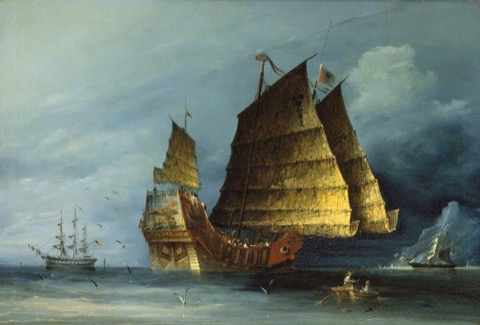
Long before anyone thought to write a premium into a ledger, traders were already managing danger through nothing grander than clever logistics. In the third millennium BCE, according to accounts that run through many insurance-industry histories, Chinese merchants working the fast and treacherous rivers of the interior are said to have practiced something as simple as it is elegant. Rather than load one boat with a single merchant's entire consignment and pray, they deliberately split each merchant's goods across many different boats, mixing everyone's cargo together across the whole flotilla. When one vessel was inevitably lost to the rapids, and one always was, no single trader was ruined by it, because each had only a fraction of his holdings aboard any one hull. The loss was real, and it was also spread so thin that it wounded everyone a little and destroyed no one.
Diversification, 5,000 years early
Splitting one merchant's cargo across many boats is the same idea a modern portfolio manager calls diversification, and the same idea an insurer calls pooling. Nobody loses everything at once, because no single event can reach all of the value at once.
That is diversification, arrived at roughly five thousand years early, and it is the same instinct an insurer later formalizes as pooling: no single event can reach all of the value at once. The Babylonians, working overland rather than by water, ran a version of the same logic on the caravan routes, where merchants and financiers shared the perils of the desert crossing among a group of backers, so that a raided or vanished caravan fell on many purses instead of one. In each case the danger had not been abolished so much as divided, and division turned out to be nearly as good as abolition when what you feared most was total ruin.
Pricing the sea in Athens and Rome
The Greeks were the first people we can watch, in their own surviving words, put an actual number on danger. By the fourth century BCE, the ports of Athens ran on what they called the maritime loan, and the Romans would later name the same instrument foenus nauticum, the sea loan. Its logic was a direct descendant of the Hammurabi clause, sharpened by generations of hard bargaining on the docks. A financier lent a merchant the money to buy cargo and mount a voyage, but repayment was made conditional on the ship's safe arrival. If the vessel went down to storm or to piracy, the debt simply dissolved along with the hull, and the lender ate the loss.
Because the lender was carrying that danger, he charged for it, and this is where the record turns thrilling for anyone who cares about how risk gets priced. The interest on a sea loan was not a flat number. It moved with the actual peril of the specific route. We know this because the speeches of Demosthenes, delivered in Athenian courtrooms in the middle of the fourth century BCE, walk through the arithmetic of real disputes. In the speech Against Phormio (Demosthenes 34), a round trip from Athens out to the Bosporus and back, long and exposed, carries an interest rate near thirty percent. In Against Lacritus (Demosthenes 35), a shorter and more sheltered run is priced closer to seven and a half percent. The number was doing something new and profound: it was carrying information. A high rate announced a dangerous journey, and a low one a safe passage, and any merchant who could read the price could read the sea.
The Athenian sea loan · 4th c. BCE
Interest on a sea loan tracked the peril of the exact route. In Against Phormio (Dem. 34) a long, exposed Athens-to-Bosporus round trip is priced near thirty percent, while in Against Lacritus (Dem. 35) a shorter, more sheltered run runs closer to seven and a half percent. The price itself carried information: a high rate announced a dangerous voyage, a low one a safe passage.
The Romans took this instinct and wrote it into law. Ordinary Roman lending was capped, over time, at the centesima, twelve percent a year, but the jurists carved out an explicit exception for the sea loan. While the ship was actually at sea, and the lender's money was genuinely at hazard, he could charge whatever the danger warranted, and only once the vessel was safe in harbor did the ordinary ceiling snap back into place. Roman law had grasped a principle it would take modern regulators centuries to rediscover: the price of carrying a risk should be free to rise to meet the size of the risk, but only for exactly as long as the risk is real. The sea loan was still a loan, and the risk was still bolted to the money that financed it. What the ancient world had achieved, though, was the honest pricing of a hazard, out loud, in a public market, with the numbers written down.
The price of carrying a risk should be free to rise to meet the size of the risk, but only for exactly as long as the risk is real.The Roman rule on the sea loan
The collegia, and the invention of the members' fund
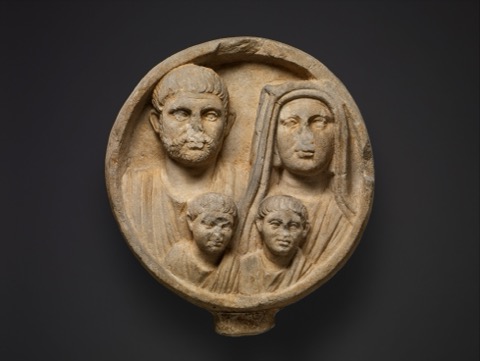
Rome added a second, quieter strand to the story, one that had nothing to do with cargo and everything to do with human dignity. Working people banded together into collegia, small voluntary associations, and among the most touching of these were the burial societies, the ones scholars call collegia funeraticia. We are not guessing about how they worked, because one of them left its rulebook carved in stone. A marble tablet from the town of Lanuvium, in the hills south of Rome, catalogued as CIL XIV 2112, records the bylaws of a society devoted to the goddess Diana and the deified youth Antinous, and it is precisely dated to the ninth of June, AD 136.
The Lanuvium tablet · AD 136
A marble inscription from Lanuvium records a burial society's bylaws in full. A new member paid one hundred sesterces and an amphora of good wine to join, then one and a quarter sesterces a month. In return the common fund guaranteed each member a proper funeral. Many paying a little, in advance, into a fund they owned together: the mutual, worked out in stone before the word existed.
The terms read like an insurance policy because, in every way that matters, that is what they were. A new member paid a joining fee of one hundred sesterces along with an amphora of good wine, and thereafter contributed a modest monthly due of one and a quarter sesterces. In exchange, the society guaranteed each member a proper funeral, drawing on the common fund to pay for it, so that no one who had paid his dues would go into the ground unmourned and no grieving family would be crushed by the cost of burying him. The rules went further still, extending the promise even to members whose bodies could not be recovered, and offering a symbolic funeral to enslaved members whose masters would not release their remains. Here, then, is the pure form of the mutual, worked out under the Roman republic and empire long before any of the vocabulary existed. Many people each paid a little, steadily and in advance, into a fund they collectively owned, and the fund stood ready to catch whichever of them death reached first. It was pooling, applied not to cargo but to grief.
The guilds carry the flame through the Middle Ages
When Rome's institutions receded, the shared fund did not die with them. It went underground into the guilds, the sworn brotherhoods of craftsmen and merchants that organized economic life across medieval Europe, and it survived there for a thousand years. A guild was many things at once. It was a professional body that set standards and trained apprentices, and it was also, crucially, a mutual relief fund for its own people. The statutes that survive make the insurance function unmistakable. An eleventh-century guild in Cambridge bound its members to support one another in sickness and in death, and to stand together against anyone who wronged one of them. A guild in Wymondham, in Norfolk, whose obligations survive in the 1389 returns that English guilds were required to file with the Crown, promised a stricken brother a set daily allowance while his illness lasted. The guild of Saint John the Baptist in Kingston upon Hull pledged a weekly payment to any member who became, in the plain and unsparing words of the charter, infirm, bowed, blind, dumb, deaf, maimed, or sick, and it kept paying for as long as that member lived.
The guild relief funds · medieval Europe
Guild statutes read like modern policies. Wymondham in Norfolk, in the 1389 guild returns, promised a sick brother a set daily allowance for the length of his illness. The guild of Saint John the Baptist in Kingston upon Hull paid a weekly sum to any member left infirm, blind, maimed, or sick, for as long as he lived. Sickness, disability, and burial coverage, funded by steady dues, centuries before the words existed.
Read those terms with modern eyes and you are looking at sickness insurance, disability insurance, and burial insurance, all rolled into a single membership and all funded by the steady dues of people who understood that any one of them might be next. The medieval guild had inherited the Roman collegium's central intuition and broadened it, so that the fund now caught its members when they died and also when they fell ill, lost their sight, or could no longer work. What the guilds did not yet have was a way to separate the protection from the fellowship. You could not buy the coverage without joining the brotherhood, taking its oath, and sharing its feasts and its faith. The promise was real, and it was also inseparable from belonging. Prying those two apart would take a different kind of place, and a different kind of person, and it would happen in the trading cities of Italy.
Genoa, and the birth of the tradeable premium
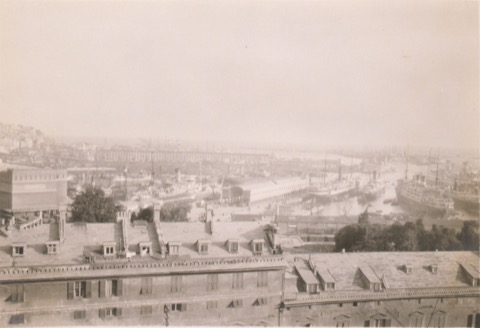
On the eighteenth of March, 1343, a Genoese notary named Tommaso Casanova drew up a document that historians, following the archival work of Federigo Melis and Enrico Bensa, count among the earliest true insurance policies known to survive. Genoa in the fourteenth century was one of the great maritime republics, a city that lived and died by cargo crossing a dangerous Mediterranean, alongside its rivals in Venice and Pisa, and its merchants had grown impatient with the old sea loan. The loan tangled two very different things together, bundling the financing of a voyage, the actual advancing of money to buy goods, with the bearing of the voyage's risk. A merchant who had his own capital, and needed no loan at all, still had no clean way to buy protection against the sea. So the Genoese did something quietly revolutionary. They cut the risk loose from the loan.
The Genoa policy · 18 March 1343
A notary named Tommaso Casanova drew up one of the earliest true insurance policies known to survive. No money financed anything: a merchant who already owned his cargo simply paid a fee, and a second party promised to make him whole if the goods failed to arrive. That fee, paid purely for the transfer of danger, is the premium in its first recognizable form. By 1369, under doge Gabriele Adorno, Genoa was already regulating the practice.
Under the new kind of contract, no money changed hands to finance anything. A merchant who already owned his cargo simply paid a fee to a second party, who in return promised to compensate him if the goods failed to arrive. That fee, paid up front and purely for the transfer of danger, is the premium in its first recognizable form, and its appearance is the pivot on which the entire modern industry would come to turn. Genoa took the idea so seriously that within a generation the city was regulating it: the first Genoese ordinance governing marine insurance followed under the doge Gabriele Adorno in 1369.
It is worth being precise about why this was such a profound break, because at a glance it looks like a small piece of paperwork. What had really happened was that risk itself became a thing that could be owned. Until that moment the danger of a voyage was welded to the voyage, and to the merchant whose fortune rode in its hold, inseparable from the ship and the cargo and the man. The premium pried them apart. The peril of a journey became an object in its own right, something one person could pick up and hand to another for an agreed price. And once risk could be owned like that, everything the modern industry does became possible in principle.
Once risk itself could be owned, it could be priced, traded, and pooled.Genoa, 1343
It could be priced, because a marketplace of buyers and sellers could now put an honest number on how dangerous a given voyage truly was, in the same way the Athenian sea loan had once encoded the sea into an interest rate, only now the number stood alone as the price of protection itself. It could be traded, because whoever accepted a danger today was free to pass a slice of it to someone else tomorrow, which is the distant headwater of insurers insuring one another. And it could be pooled, gathered with hundreds of other separated risks into a single book, so that the premiums paid by the many merchants whose ships came safely home would quietly cover the ruin of the few whose ships never did. The Chinese river traders had pooled cargo by splitting it across boats, and the Roman collegia had pooled grief across their members. The Genoese now did something more abstract and more powerful than either: they pooled risk itself, as a freestanding commodity, bought and sold in a market.
That is the moment the through-line of this whole history crosses a threshold. From the Babylonian clay tablet to the Athenian dock to the Lanuvium marble to the Norfolk guild, human beings had been feeling their way toward one idea, that a catastrophe survivable by no single person becomes survivable by many if they agree to carry it together. In fourteenth-century Genoa that idea finally acquired a price tag it could wear on its own, and the instant it did, risk became a thing that people could hold, weigh, exchange, and gather into pools deep enough to swallow disasters whole.
What comes next
The tradeable premium was the hinge, and everything after it is elaboration and scale. Standing in that Genoese counting house in 1343, the world still lacked two things it would take three more centuries to find. The first was a catastrophe large and public enough to make ordinary people, and not only merchants, demand protection for their homes and their lives. The second was the mathematics to price that protection honestly, moving from the seasoned guess of a dockside financier to something a person could actually calculate.
Both were coming. In September of 1666 a fire that began in a baker's shop would burn medieval London to the ground and change forever what a city expected insurance to do. In a smoky coffeehouse near the Thames, a crowd of merchants and sea captains and men with capital to risk would invent the marketplace that still bears the owner's name and would teach the world, quite literally, what it means to write your name under a risk. And an astronomer better known for a comet would sit down with a city's records of its own dead and build one of the first honest tables of how long a human being can be expected to live, turning the fair price of a promise from a hope into a sum.
That is the story of Part 2, "Fire, Coffee, and Mathematics," where the oldest bargain finally meets the modern world.
The long arc
Six milestones from antiquity to the tradeable premium
More than three thousand years, from a clay tablet in Babylon to the moment a Genoese notary cut risk loose from the loan and gave it a price it could wear on its own.
-
c. 1750 BCE
Hammurabi's bottomry clause
A clause in the Code of Hammurabi forgives a Babylonian merchant's voyage loan if his cargo is lost. The first written risk transfer.
-
3rd millennium BCE
Chinese cargo-splitting
River traders spread each merchant's goods across many boats, so one wreck never ruins one trader. Pooling by logistics.
-
4th c. BCE
Greek and Athenian sea loans
The foenus nauticum prices danger by route. Demosthenes records rates near thirty percent for a long, exposed voyage. Risk begins to carry information.
-
AD 136
The Roman collegia
The Lanuvium tablet records a burial society's bylaws: steady dues into a shared fund guarantee each member a proper funeral. The mutual, carved in stone.
-
Middle Ages
Guild relief funds
Sworn brotherhoods pay the sick, the maimed, and the dying from members' dues. Sickness, disability, and burial coverage in one membership.
-
1343
Genoa's marine premium
A Genoese notary writes one of the first true policies. Insurance detaches from the loan; a fee paid up front buys pure risk transfer.
The History of Insurance · Part 1 of 3
Part 1 of 3. Part 2, "Fire, Coffee, and Mathematics," follows the story from the Great Fire of London to the coffeehouse that became Lloyd's and the mathematics of mortality.
Continue · Part 2 of 3
Fire, Coffee, and Mathematics: How Insurance Became a Science
The Great Fire of London, the coffeehouse that became Lloyd's, and an astronomer's table of the dead: how the oldest bargain acquired brigades, a marketplace, and the mathematics of mortality.
Part 2 is forthcoming. This link will resolve once "Fire, Coffee, and Mathematics" publishes.
References
Sources & Notes
- Code of Hammurabi, bottomry clauses. Sections 100 to 107 and 236 to 240 in the Harper translation, via the Avalon Project. avalon.law.yale.edu/ancient/hamframe.asp
- Athenian and Roman maritime loans. Oxford Classical Dictionary, entry "Maritime loans," on the foenus nauticum and the conditional sea loan.
- Demosthenes on sea-loan rates. Against Phormio (Dem. 34), for the roughly thirty percent Bosporus round-trip rate, and Against Lacritus (Dem. 35), for the roughly seven-and-a-half percent shorter route. Loeb Classical Library texts.
- The Roman centesima ceiling. William Smith, Dictionary of Greek and Roman Antiquities, entry "Fenus," via LacusCurtius. penelope.uchicago.edu/Thayer/E/Roman/Texts/secondary/SMIGRA*/Fenus.html
- The Lanuvium burial society. Inscription CIL XIV 2112, dated 9 June AD 136. Text and translation in Philip Harland, Greco-Roman Associations, inscription no. 310. philipharland.com/greco-roman-associations/310-regulations-of-the-worshippers-of-diana-and-antinous/
- Medieval guild relief obligations. Cambridge guild statutes in Victoria County History, Cambridgeshire, vol. iii, pp. 133 to 135; the Guild of Saint John the Baptist, Kingston upon Hull, in Victoria County History, Yorkshire East Riding, vol. i; Wymondham obligations recorded in the 1389 English guild returns.
- The 1343 Genoese policy. Federigo Melis, Origini e sviluppi delle assicurazioni in Italia (1975), and Enrico Bensa, Il contratto di assicurazione nel Medio Evo (1884).
- The 1369 Genoese marine-insurance ordinance under Doge Gabriele Adorno. Palgrave Handbook, chapter "Genoa 1340 to 1620." doi.org/10.1057/9781137411389_2
A note on the Chinese river-cargo story: it appears widely in insurance-industry histories but rests on no single named primary source, and it is presented here as tradition rather than documented fact.